
A smart plug is a small adapter that sits between the wall and something you already own, and it does one job: it turns that thing on and off without your hands. The real question behind smart plug vs regular plug is not convenience. It is a question about one published watt figure, and about the jobs a switched outlet cannot do for you.
Where smart plug vs regular plug is actually decided
An ordinary outlet has no electronics in it. It draws nothing of its own, it keeps working when the internet does not, and it fails only when the wiring behind it does. A smart plug adds a radio, a small controller and a relay, and all three have to be powered every second of the day. That standing draw is the price of the schedule, and it is the one variable that multiplies with every extra plug you buy. Set against that is the thing an ordinary outlet can never do, which is act on a clock or on an app. The table below puts smart plug vs regular plug side by side without naming a single model.
| What you are comparing | A regular outlet | A smart plug |
|---|---|---|
| Power it uses doing nothing | None of its own | A small, constant draw, even while switched off |
| How it gets switched | By hand, at the device | By app, by voice, by schedule, or by hand |
| Behavior when the network drops | Unchanged | Varies by model; some keep local control, some do not |
| Energy reporting | None | Some report power or energy; no graded accuracy class |
| Certification you can look up | Not a labeled category | Recognized only inside a certified system package |
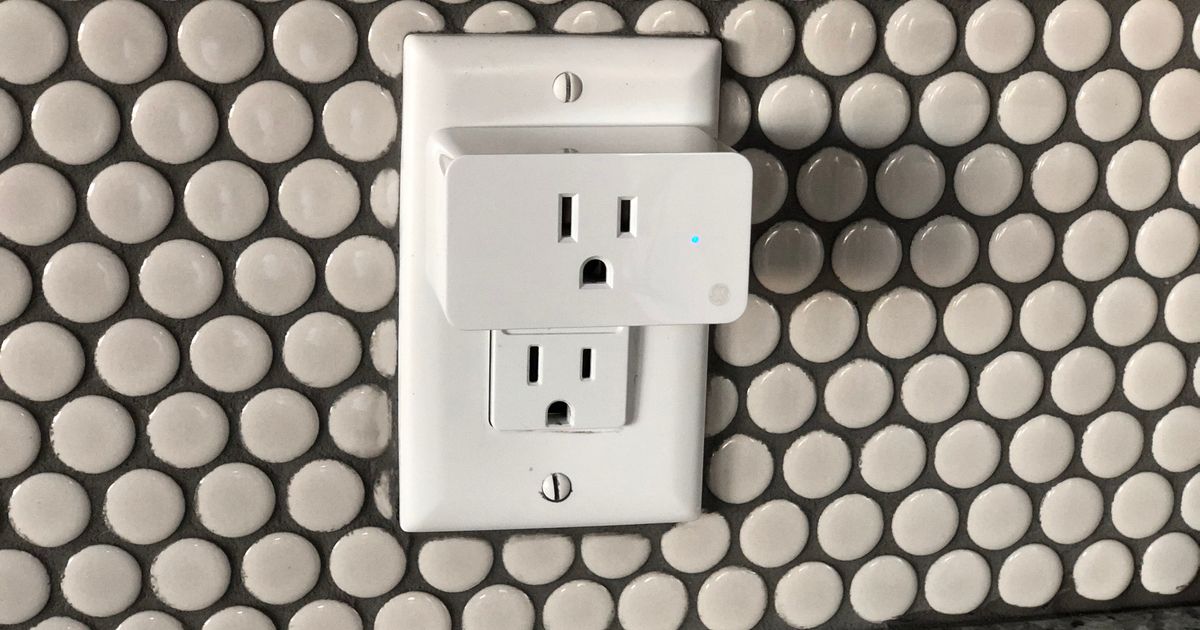
| Effect on the outlet itself | None | Adds depth and width, and can block the second socket |
| What it costs you to undo | Nothing to undo | Unplug it, and the device behaves as before |
The one published number, and where it lives
There is a federal label in this aisle, and it does not go on a plug. The Environmental Protection Agency runs an ENERGY STAR program for Smart Home Energy Management Systems, and its Key Product Criteria page describes what gets certified: packages that “are composed of packages of smart home devices and corresponding user services which are accessible through a single platform interface, such as an app.”
Inside that package specification, a smart plug does have a number. The required-devices table lists one “Plug Load Monitor/Control”, described as a category that “Includes smart plugs, smart power strips, and home energy monitors; must be capable of reporting power or energy consumption.” Its maximum standby power is set at 1.0 watts. For comparison, the same table allows 3.0 watts for the connected thermostat and 0.5 watts for a smart light switch, and the platform itself has to offer a lighting safety mode that “consumes no more than 0.03 kWh/day”.
Then the page closes the door on using any of that as a shopping label. It states that devices “(such as smart plugs and power strips) which are not certified under a device-specific ENERGY STAR program are not permitted to be labeled individually with the ENERGY STAR mark.” So the ceiling exists, it is public, and it is attached to a system rather than to the two-pack on the shelf. The saving is credited to the coordination, not to the adapter: the certified platform has to respond to occupancy data, suggest actions from usage patterns, and report field performance back to the agency every six months.
Reading the smart plug alternative to regular plug claim
A smart plug does not replace an outlet. It occupies one. That is worth saying plainly, because the phrase smart plug alternative to regular plug gets used as though the two are interchangeable fittings, and they are not: one is permanent wiring and the other is an accessory hanging off it. The practical consequence is a short list of jobs the accessory cannot take over.
- A device with a physical power button that stays off after the power is cut. Restoring power does not press the button.
- A device that resets a clock, a cycle or a setting every time it loses power.
- Anything you would not want switched while nobody is in the room.
- A load heavier than the plug is rated for, which includes a surprising number of heating appliances.
- A fitting that has to disappear into the wall, because a smart plug is always visible and always in front of the plate.
What a smart plug vs regular plug review usually leaves out
Five things decide how this purchase ages, and a short smart plug vs regular plug review rarely gets past the first of them.
- The standing draw, multiplied by the number of plugs. One is trivial. Eight is a small appliance running all year.
- What survives an internet outage. Some models keep a local schedule and a working button; others become an ordinary, slightly fat plug.
- Physical footprint. On a standard duplex receptacle, a wide body can cover the second socket, which turns one added feature into one lost outlet.
- What the reported watt figure is graded against, which is nothing. Reporting is a required capability inside the system specification, not a measured accuracy class.
- What happens when the app is retired. The relay is hardware and will outlive the service that schedules it.
Choosing smart plug or regular plug for beginners
The useful starting point for smart plug or regular plug for beginners is not the app at all. It is a lamp, a fan or a holiday light string: something with a mechanical switch left in the on position, something that does not care about being cut off, and something you actually forget to turn off. If that describes nothing in the room, the outlet already does the job and the adapter adds a standing watt for no return.
Scale up only after the first one has survived a month. A single plug on a lamp proves the radio reaches that corner of the house; four plugs on four loads proves nothing extra and quadruples the standing draw before you have learned anything.
What to check in the listing
Most of the decision is answerable before you buy, from the listing text alone.
- The rated amps and watts, and whether the listing says anything about motor or heating loads rather than quoting one number for everything.
- The radio band. A plug that joins only a 2.4 GHz network will not see a 5 GHz one, which is a setup problem rather than a fault.
- Whether local or offline control is described at all, and whether the physical button works without the app.
- The body dimensions, if published, against the spacing of a standard duplex receptacle.
- Whether energy reporting is claimed, and in what units.
- Whether the model is sold as part of a certified system, which is the only place the published standby ceiling applies.
Related guides
- Best Smart Lights for Home Automation in 2026
- Best Smart Home Hub for Beginners
- Cheapest Smart Thermostats for Renters
Frequently Asked Questions
Four things get asked once the first plug is in the wall, and the answers are all in the same two places: the rating and the listing.
Ques: Does a smart plug use power when the device is off?
Yes. The radio and controller stay awake so the plug can hear the next command. The federal system specification caps that figure at 1.0 watts for a certified package, which gives you a sense of the order of magnitude rather than a reading for any one model.
Ques: Will a smart plug work without Wi-Fi?
The physical button almost always works. Schedules, app control and voice control depend on the model, and the listing is the only place that answer appears before purchase.
Ques: Can a smart plug run a space heater or an air conditioner?
Only if the rating on the plug covers it, and many do not. Heating appliances sit close to the ceiling of a standard household circuit, which leaves very little headroom for an adapter in the middle.
Ques: Is the energy figure in the app accurate?
Treat it as a trend rather than a measurement. Reporting power or energy is a required capability inside the certified system specification, and no graded accuracy class attaches to it.
You can look at the current range here:
Check on Amazon See on Walmart
Bottom line
A regular outlet costs nothing to run and does nothing on its own; a smart plug costs a standing watt and buys a schedule. Start with one load that genuinely gets left on, read the rating before you plug in anything that heats, and treat the energy figure in the app as a direction rather than a number.