
Two ways to tidy a room sit a few aisles apart at Target, and only one of them is furniture. The choice of storage bins vs built in storage is usually framed as a budget decision, and the more useful way to read it is as a question about which half a published rule reaches, and which half prints a capacity figure you can compare at all.
This is an independent editorial review. Target did not review or approve this article.
The federal safety standard quoted below is written about one named class of furniture and about the companies that make and import it. It places no duty on a shopper and passes no verdict on any product here. What makes it worth reading is its definition, which draws a line straight through the middle of this comparison. Anchoring advice below is general; for a specific wall, a specific unit and a specific child, follow the instructions that came in the box.
Where storage bins vs built in storage is settled
Bins win on reversibility and lose on permanence, and that is the whole trade in one sentence. A bin is finished when it arrives, it moves house with you, and its capacity is whatever the maker decided to print on it. Fitted storage is measured by the opening it fills, it is sized once, and it stays with the room. Neither of those is an opinion, and the table below is where storage bins vs built in storage separates before any price is involved.
| What decides it | Storage bins | Built in storage |
|---|---|---|
| Where the capacity number comes from | Printed by the maker, in a unit of its choosing | Measured from the opening it fills |
| How long the decision lasts | Reversible in an afternoon | Fixed once it is installed |
| Who puts it together | Nobody; it arrives finished | A fitter, or a weekend and a drill |
| What it does to the room | Stands on a floor or a shelf | Becomes part of the wall |
| Federal stability rule that covers it | None | None |
| What moves out with you | All of it | None of it |
| What the listing can tell you in advance | Outside dimensions and a capacity figure | Very little; the room answers it |
The rule names a product class, and neither half is in it
There is exactly one federal stability standard sitting near this aisle, and reading its first paragraph settles more than any product page will. Part 1261 of Title 16 of the Code of Federal Regulations, a Consumer Product Safety Commission standard, sets out safety requirements for clothing storage units, and states that they “are intended to protect children up to 72 months of age from tip-over-related death or injury.”
The next paragraph is the one that matters here. A clothing storage unit means “any free-standing furniture item manufactured in the United States or imported for use in the United States that is intended for the storage of clothing, typical of bedroom furniture”, and “All clothing storage units that are manufactured after September 1, 2023, are subject to the requirements of this part.” The part then adopts a named industry specification, ASTM F2057-23, by reference, and that is where the actual test method lives.
Run the two halves of this comparison through that definition. A stack of bins is not furniture. A shelf screwed to a wall is not free-standing. A toy cubby is free-standing furniture in a bedroom, and it is intended for toys rather than for clothing, so it falls outside the class as written. The rule is well drawn for what it covers and simply does not reach either of the things most shoppers are choosing between.
What makes that worth knowing is that the seller’s own advice puts the uncovered product in exactly the covered room. The cube organizer pages at Target suggest that “Some families place a cube storage organizer in a toddler bedroom for books, stuffed animals and art supplies”, answer the question of whether cubbies suit toddler rooms with “Yes. Cubbies help toddlers reach toys and books more easily while encouraging simple cleanup habits”, and note that “Stackable storage can also help save floor space in apartments, dorms and shared family rooms.” A child reaching upward, in a bedroom, on a unit the shopper has been encouraged to build taller, is the exact scenario the rule was written around and the exact product it does not name. The answer is the anchor in the box, used, rather than any claim on the listing.
Two capacity units in one Target aisle
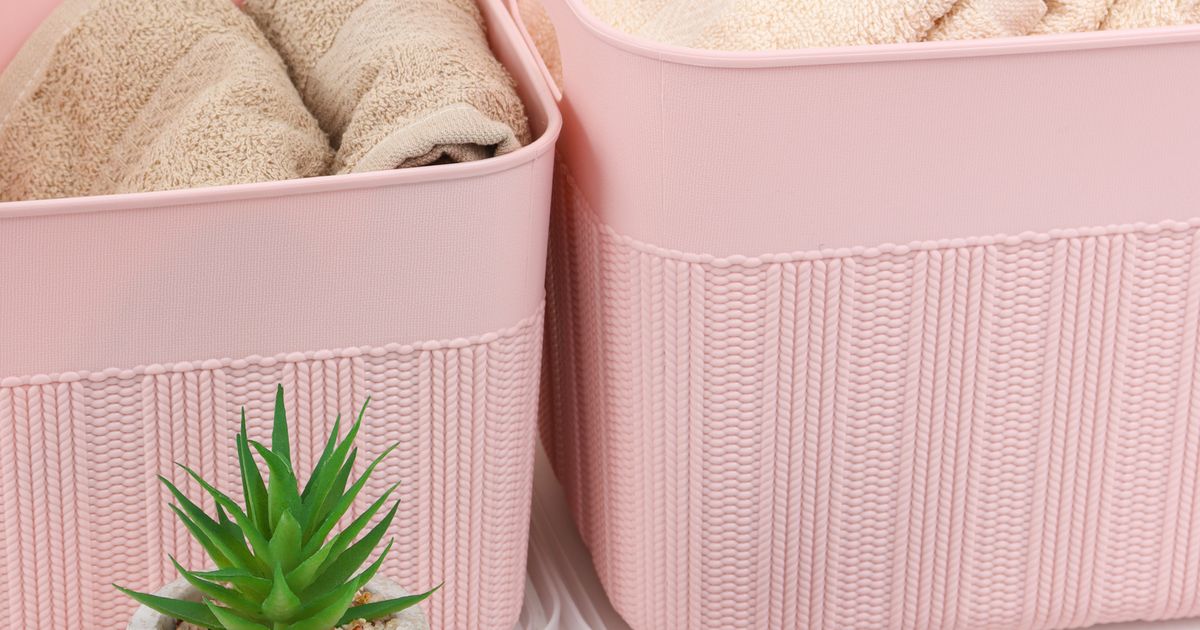
The storage bin category describes itself as something to browse by “different styles, materials, capacities, and usage to suit your needs”, with containers “in an array of materials like canvas, paper, plastic, wood and more”. Capacity is named as a sorting variable. Read across the house-brand lines on 2026-11-09 and the unit changes underneath you.
One stacking clear bin range at Target is sold in liters, at 4, 5, 6, 11 and 26 liters. A separate clear storage box range in the same aisle is sold in quarts, at 6, 16 and 56 quarts. Both are the same brand, both are rigid clear boxes with lids, and nothing on either listing converts one to the other. The same pair of listings also describes material at two different levels: the 26 liter bin gives its material as plastic, while the 4 liter bin in the same stacking range names the resin instead. Neither is wrong, and both were written for different readers, which is precisely why the figures cannot be lined up.
The store says as much in its own terms, last updated September 10, 2026, which state that “we cannot and do not guarantee the accuracy or completeness of any information, including prices, product images, specifications, availability and services”. Specifications are named in that sentence. For a comparison that turns on a capacity figure, that is a reason to measure the shelf rather than trust the number.
Reading storage bins vs built in storage pros and cons
Set out honestly, storage bins vs built in storage pros and cons is less a scorecard than a question about how long you expect to live with the room.
- Bins are reversible. Buy the wrong size and you have bought a wrong-sized box, not a wrong-sized wall.
- Bins are bad at filling awkward volume. A rectangle in a sloped or tapered space wastes the corners by design.
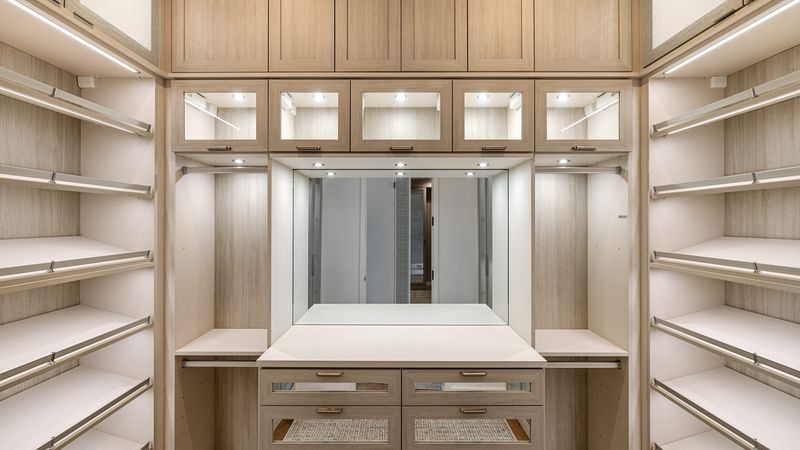
- Fitted storage uses the whole opening, which is the only way to get the last few inches at the top of a closet.
- Fitted storage is priced per project rather than per unit, so the number arrives after a measure rather than on a shelf tag.
- Bins have to be bought in quantity to do a whole room, and the store “does not offer additional discounts on large orders of a single item or on large orders of many individual items”, and reserves the right “to limit quantities on orders placed by the same account”.
- Fitted storage adds nothing you can take to the next address.
The honest answer to is storage bins better than built in storage
Asked flatly, is storage bins better than built in storage has no general answer, and it has a very quick personal one. Five checks settle it in about ten minutes.
- Measure the opening, not the stuff. Width, depth and the usable height under the shelf above.
- Count how many years you expect to keep the room. Under three, bins almost always win on cost of being wrong.
- Check whether the space is square. Tapered eaves, sloped ceilings and odd returns are the case for a fitted run.
- Decide who is going to reach into it. A unit a small child pulls on needs an anchor whichever product you buy.
- Write down the unit the capacity is printed in, then convert it yourself before comparing two listings.
A browse of the current range at Target makes the first of those easy, because the outside dimensions are printed in the listing titles themselves.
What storage bins vs built in storage 2026 puts on the listing
Judged on what is actually published, storage bins vs built in storage 2026 is a lopsided contest: one side is described in detail by a listing and the other is described by your tape measure.
- Outside dimensions, which the bin listings print in the product title itself. These are external, so the usable interior is smaller.
- Capacity, in liters or in quarts depending on the range, and never both.
- Material, which may be given as a generic polymer on one listing and as a named resin on its sibling.
- Whether the lid is included, and whether it latches, which changes whether the box can be stacked loaded.
- Nothing at all about load rating, stacking height or tip resistance, because no published grade covers it.
Related guides
- Garden Cart vs Wheelbarrow: Two Capacity Numbers
- Solid Wood Furniture vs Particle Board
- Hard Cooler vs Soft Cooler: What the Certification Covers
Frequently Asked Questions
Four questions settle most of this purchase, and none of them is about color or style.
Ques: Does a federal safety rule cover storage bins?
No. The Consumer Product Safety Commission standard in this area is written for free-standing furniture intended to store clothing, typical of bedroom furniture. A bin is not furniture, and a wall-fixed shelf is not free-standing, so neither one sits inside the definition.
Ques: Why do two Target bins use different capacity units?
Because the ranges were written separately. One stacking range is listed in liters and a second clear box range in quarts, with no conversion given on either listing. Convert them yourself before you compare.
Ques: Is fitted storage always more expensive than bins?
Per project, usually. Per usable cubic foot in an awkward space, often not, because a fitted run can use volume a rectangular box cannot reach. The honest comparison needs a measurement first.
Ques: Should a storage unit in a child’s room be anchored?
Anchor anything free-standing that a child can climb or pull on, and follow the hardware and instructions supplied with the unit. The federal rule covering tip-over is narrower than the hazard is.
The current lineup is published here:
Bottom line
Bins buy you reversibility and a number printed in a unit somebody else chose; fitted storage buys you the whole opening and nothing you can take with you. Measure the space before you read either listing, convert the capacity yourself, and anchor whatever a child can climb.