
Two pairs of jeans can hang on the same rail, cut from the same fabric in the same wash, and be sold under two different names for the one thing that separates them. That name is a word, not a measurement. The high rise jeans vs mid rise jeans question is decided by where a waistband is designed to sit, and a retailer like Buckle will let you sort by almost every other number on the garment first.
This is an independent editorial review. Buckle did not review or approve this article.
The federal list referred to below is a register of product standards that were withdrawn and never replaced. It places no duty on any seller, it does not suggest that any label is wrong, and it is here to establish one fact only: the body measurement this comparison turns on has had no national reference point for decades.
What high rise jeans vs mid rise jeans comes down to in one table
Every other variable on a pair of jeans is published as a number somewhere. This one is published as an adjective, and the adjective belongs to whoever printed it.
| Variable | How it is published | Can you sort by it |
|---|---|---|
| Waist | Inches, as a figure | Yes, as a number |
| Inseam | Inches, and also as words | Yes, both ways |
| Leg length | Words only | Yes, on a separate scale |
| Overall size | Letters and figures together | Yes, across three systems |
| Cut through the hip | Words only | Yes, on a fit scale |
| Rise | Words only | Yes, on a five value scale |
| Rise in inches | Not published on the listing | No |
The bottom two rows are the article. You can filter for the word and you cannot filter for the measurement, because on a listing page the measurement is not there to filter.
The one national standard for this measurement is on a withdrawn list
The National Institute of Standards and Technology keeps a public page called Withdrawn DOC Product Standards (PS). It is a plain table of standards the Department of Commerce once issued and no longer maintains, and anyone wanting a copy of one is asked to write to the standards information office for it.
Three rows down from package quantities of instant mashed potatoes sits PS 42-70, published in 1970, filed under Clothing, titled “Body Measurements for the Sizing of Women’s Patterns and Apparel”. It is not alone. PS 36-70 covered “Body Measurements for the Sizing of Boys’ Apparel”, PS 45-71 covered “Body Measurements for the Sizing of Apparel for Young Men (Students)”, and PS 54-72 covered “Body Measurements for the Sizing of Girls’ Apparel”. All four are on the withdrawn list.
That is the whole reason this comparison behaves the way it does. There is no national document that says a high rise begins at one figure and a mid rise at another, so each seller writes its own definition, and the definitions are allowed to differ from one label to the next without anybody being wrong.
Reading high rise jeans versus mid rise jeans on the Buckle filter panel
A filter panel is the most honest spec sheet a clothing retailer publishes, because it shows exactly which variables the business has agreed to stand behind. The women’s jeans category at Buckle, read on November 8, 2026, offers seventeen of them.
Two are measurements. Waist runs as individual figures from 22 to 38. Inseam runs from 24 to 38 and then switches vocabulary mid list, adding Short, Regular, Long and Extra Long to the same dropdown. A separate Length facet repeats that idea on a seven step word scale of its own: Ankle, X-Short, Short, Regular, Long, X-Long and XX-Long.
Size is a third system again, mixing XX-Small through X-Large with numeric values. Fit sorts the cut through the hip into Baggy, Slim, Universal and Curvy. The rest of the panel covers Style, Brand, Color, Price Range, Stretch, Wash, Pattern, Distress, Materials and Collection.
And Rise is there, with five values: Low, Low Slung, Mid, High and Ultra High. Comparing high rise jeans versus mid rise jeans is therefore picking two rungs out of five, on the one scale in the whole panel that is made of adjectives.
Where the difference between high rise jeans and mid rise jeans stops being a number
The seller does define its terms, and the definitions are worth reading closely because of what they use as the reference point. The Buckle jeans fit guide answers the question directly: “High-rise jeans: Sit at or above the belly button. These jeans are great for anyone wanting extra midsection support.” For the next rung down it says “Mid-rise jeans: Sit just below the belly button. This is a highly versatile choice that flatters most body shapes.” And for the rung below that, “Low-rise jeans: Sit right on the hips, offering a fashion-forward, relaxed feel.”
Read those three together and the structure of the difference between high rise jeans and mid rise jeans is clear. The anchor is a landmark on your own body, not a figure on a tape, which is a genuinely sensible way to explain a garment and a completely unusable way to compare two of them across labels. Two people measuring from the same landmark will get two different numbers, and neither of them is reading the wrong instruction.
There is also a quiet arithmetic problem. The fit guide names three rises. The filter panel offers five. Low Slung and Ultra High exist on the shelf and are not defined in the guide, so the vocabulary the aisle sorts by is wider than the vocabulary the aisle explains.
You can see the current denim range on the official site here:
Choosing high rise jeans or mid rise jeans for beginners
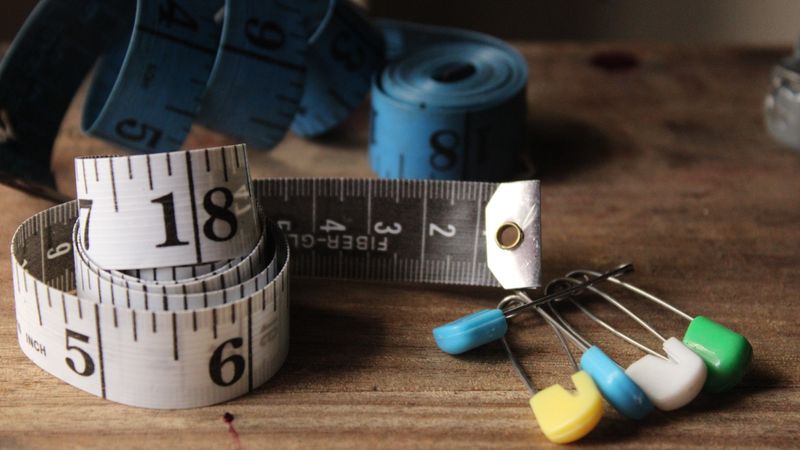
If the rise name cannot be compared across labels, the practical move is to stop trying and measure the pair you already own. Take a pair that sits where you want it, lay it flat, and measure from the top of the waistband at the front down to the crotch seam. That figure is yours, it is in inches, and it travels between labels in a way the adjective does not.
Working through high rise jeans or mid rise jeans for beginners then becomes an ordinary shopping task:
- Use the word filter to narrow the shelf, since it is the only rise control the site gives you.
- Use your own figure to judge the pictures inside that filtered set.
- Treat the leg length facets as two separate questions, because the site does.
- Check the fit value as well as the rise value, since a Curvy high rise and a Slim high rise are not the same garment.
It is also worth reading what the seller says about fit generally. The same guide advises that “Your jeans should feel comfortably snug around your waist without pinching or causing discomfort”, and adds that “It is generally better for them to be a little tight when you first put them on rather than a little loose.” That is a statement about how denim behaves after an hour of wear, and it applies the same way at either rise.
What to check on the listing before you buy
Four checks, in the order that settles the purchase:
- Your own front rise figure, measured flat from a pair that already sits right.
- The rise value on the listing, read as a name on that retailer scale rather than as a universal grade.
- The fit value, which changes the shape of the same rise completely.
- Inseam and length separately, because they are two different facets with two different vocabularies.
None of this is concealed. The company behind the storefront is plainly identified, at 2407 W 24th Street in Kearney, Nebraska, and the site prices in dollars and explains its own terms in its own guide. The measurement simply is not part of the listing, and no amount of careful reading will find a figure that was never printed.
Related guides
- Spread Collar Shirt vs Point Collar Shirt
- Heavyweight Cotton Polo vs Lightweight Cotton Polo
- Polo Shirt vs T Shirt: what the listing states
Frequently Asked Questions
Four questions come up once the rise name stops behaving like a specification.
Ques: Why can I filter by rise but not by a rise figure?
Because the figure is not on the listing to filter. The site publishes waist and inseam as inches and publishes rise as one of five names, so the name is the only rise control available.
Ques: Is a high rise from one label the same as a high rise from another?
Not necessarily. No national standard defines the boundary, and Buckle anchors its own definitions to a landmark on the body rather than to a measurement.
Ques: Why are there five rise values but only three definitions?
The published Buckle fit guide explains high, mid and low. Low Slung and Ultra High appear on the filter panel without a matching entry, so the sorted vocabulary is wider than the explained one.
Ques: What should I measure at home?
Lay a pair that fits flat and measure the front waistband edge down to the crotch seam. That single figure is comparable across labels in a way the rise name is not.
You can see the current denim range on the official site here:
Bottom line
One variable in this comparison is sold as an adjective because the only national document that ever defined it was withdrawn and never replaced. Filter on the word to narrow the shelf, then judge the result against a figure you measured yourself, and the two rungs stop being a guess.