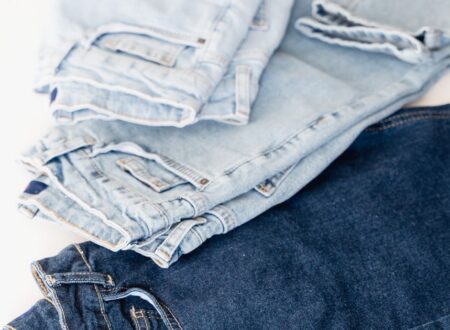


Two cardigans can carry the same letter on the label and sit completely differently once they are on. The choice between a relaxed layered outfit vs structured outfit gets written up as a mood or a style preference, when it is really settled by a measurement: the distance between your own body and the clothes hanging off it. Free People sells both shapes, and the numbers that decide the question are split across two of its own pages.
This is an independent editorial review. Free People did not review or approve this article.
Every figure below was read from one seller’s own published pages on 25 November 2026. Sizes, stock and policies change without notice, no measurement quoted here is a promise about the garment that arrives, and nothing in this article is a fit guarantee.
Comparison table: relaxed layering against structured shapes
| Question | Relaxed layered outfit | Structured outfit |
|---|---|---|
| What holds the shape | The fabric and the extra room cut into it | Seams, darts, shoulders and interfacing |
| Room between body and garment | Deliberately generous, and the whole point | Close and controlled by design |
| What the size label is doing | Picking a starting point, not a fit | Picking a fit much more directly |
| How a sizing mistake shows up | Looks shapeless or swamps a short frame | Pulls, gapes or restricts at the shoulder |
| What the listing usually prints | A style word such as oversized or cropped | A fit word and sometimes a cut name |
| Where the risk sits | Guessing how much room is too much | Guessing one size up or down |
| Care load over a year | Worn over everything, washed often | Worn less often, cleaned more carefully |
What relaxed layered outfit vs structured outfit actually measures
Clothing people call the gap between a body measurement and a garment measurement ease. A tailored jacket is cut with very little of it, which is why the shoulder seam has to land in one specific place. A layering cardigan is cut with a lot of it, because the garment is supposed to fall open, slide over a second layer and move when you do. So relaxed layered outfit vs structured outfit is not two moods. It is two decisions about how many inches of room the maker put in before the thing ever reached a listing page.
That matters for shopping because only one of those two numbers is ever published in a size chart, and it is not the garment one.
Running a relaxed layered outfit vs structured outfit comparison across two pages
A relaxed layered outfit vs structured outfit comparison on this site needs two tabs open, and the reason is worth saying plainly.
The size chart measures you. Its tables are headed “Size Measurements (Inches)” with rows for Bust, Natural Waist, Drop Waist and Hips, and the instructions are addressed to a person holding a tape measure: “Measure under your arms at the fullest part of your bust. Keep the tape level,” and for the waist, “Measure around your natural waistline, keeping the tape comfortably loose.” Those are body numbers. For tops, the smallest size sits at roughly 33 to 34 inches in the bust.
One section of the same chart quietly switches sides. For inseam, the instruction is to lay the trousers down and “measure from the crotch seam to the bottom of the leg” on a flat surface. That is a garment number, printed in the same table style as the body numbers, with nothing marking the change.
Then an individual listing prints a third set. One cashmere-blend cardigan on the site lists a bust of 37.5 inches, a length of 19.5 inches and a sleeve length of 25 inches. The page never says whether those describe the wearer or the garment laid flat. A reader cannot tell from the page alone whether the listing figure is meant to match the chart figure or sit comfortably above it, and that difference is the entire relaxed-versus-structured decision.
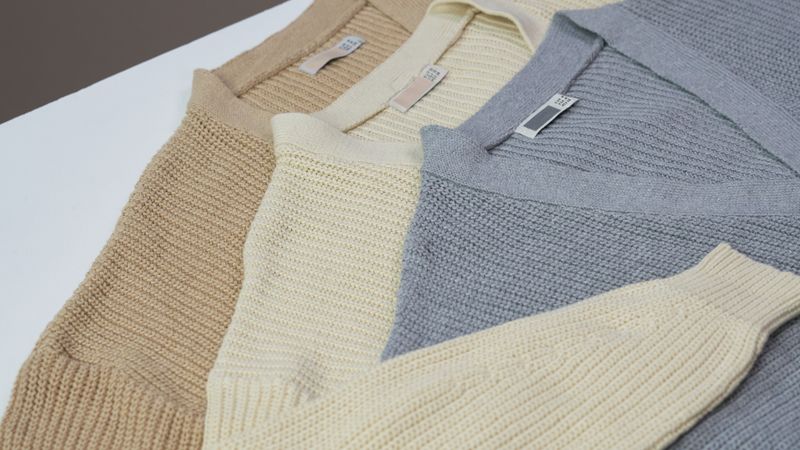
The cardigan shelf sorts by six things, and fit is not one of them
Read on 25 November 2026, the cardigan category listed 74 products. The filters offered were:
- Style
- Color
- Size
- Material
- Price
- Sleeve Length
Sorting ran through Featured, Price Low to High, Price High to Low, Newest, Bestselling, a ratings sort from high to low, and alphabetical both ways. There is no filter for fit, no filter for body length and no filter for fabric weight. The closest thing is Style, whose own links include values such as Oversized and Cropped, which turns the silhouette into a name rather than a number. If you want the roomiest knit on the page, no control on that page will find it for you.
That is a fair description of the category as a whole rather than a complaint about one retailer, and it is the practical reason a layering buy goes wrong more often than a blazer buy does. You can see the current range on Free People and check the facet list yourself.
You can check current options here:
Check Best Deals on Free People
One product page, two answers about fit
The same cashmere-blend cardigan is a neat illustration. Its details block reads “Fit: Relaxed fit, classic cut” and the copy describes it as a “relaxed fit with a scoop-neckline and button-front closures,” while the fit selector further down the page reads Regular. One page, two answers, on the single attribute the shopper is choosing on.
Neither statement is dishonest. A details block is written by whoever merchandised the garment and a selector value comes from a fixed list that every product on the site has to fit into. The useful reading is that a one-word fit value is a filing category, and the sentence underneath it is the better guide.
The same page gives the fiber split as “90% Wool, 10% Cashmere” and the care line as “Hand Wash Cold,” and under origin it prints only “Import” with no country named. For a piece you intend to wear over everything all winter, the care line is a running cost in time, and it belongs in the comparison next to the measurements.
Where relaxed layered outfit or structured outfit which is better stops being a style question
Asked flatly, relaxed layered outfit or structured outfit which is better has no answer, because the two are solving different problems. It becomes answerable the moment you convert it into a question about room.
A structured piece wants your measurement and very little above it. A relaxed layering piece wants your measurement plus whatever is going underneath plus the drape you actually want to see. If you layer a knit over a fitted base, the base layer eats part of that allowance before the cardigan ever hangs. The brand puts the decision back in your hands in one sentence on the size chart: “If unsure of size, please choose based on desired fit.” That line is doing a lot of work, and it is the honest version of what every size chart on every apparel site is quietly telling you.
The same page adds the caveat that “all conversions are approximate and may vary by label, brand, or personal preference of fit.”
What a relaxed layered outfit vs structured outfit review usually leaves out
A relaxed layered outfit vs structured outfit review tends to stop at how the clothes look in a photograph. The part that decides if the garment stays in the wardrobe is the returns machinery behind it, and on this site that machinery is unusually specific right now.
Returns received at the warehouse within 30 days of delivery go back to the original form of payment, and later arrivals are issued as an e-gift card instead. There is a seasonal exception running at the time of writing: purchases made between 1 October 2026 and 24 December 2026 can be returned to the original form of payment through 31 January 2027, provided the price ticket is still attached and the original sale receipt comes with it. Exchanges are handled through an online portal described as offering “free even exchanges,” and the original item has to reach the warehouse within 14 days of the exchange or the exchange order is canceled.
For a layering piece that is genuinely useful, because the fit question is answered by wearing the thing over the clothes you own, not by reading a chart.
What to check on the listing before you buy
- Measure your bust and natural waist as the chart describes, and write the two numbers down.
- Find the garment figures on the individual listing rather than the size chart, and note that the page may not say whether they are body or flat measurements.
- Decide how many inches of room you want on top of your own number, and treat that figure, not the letter on the label, as the thing you are shopping for.
- Add the base layer you intend to wear underneath, then re-check the number.
- Read the care line before the style words, because a hand-wash knit worn three times a week is a different purchase from a machine-washable one.
- Check the return window against the date you will actually try it on, which for a gift is not the date it ships.
Related guides
- Blazer vs suit jacket: what the structure is doing
- Free People vs Urban Outfitters: where the ranges differ
- Heavyweight vs lightweight cotton: reading fabric weight
Frequently Asked Questions
Four questions come up more than any others once the measuring tape is out.
Ques: Should I size up for a relaxed or layered look?
Not automatically. A garment already cut with generous room may be roomy enough at your usual size, and sizing up a second time tends to drop the shoulder seam past the point where the knit still reads as deliberate. Compare the listing figure with your own measurement first, then decide.
Ques: Why does the size chart measure my body but the listing print a garment number?
They are answering different questions. A chart has to cover every product on the site, so it anchors on the wearer. A listing describes one garment. The site does not reconcile the two for you, which is why writing both numbers down is worth the two minutes.
Ques: Can one piece work in both a relaxed and a structured outfit?
A mid-weight knit with a defined shoulder often can, because it has enough body to sit cleanly under a coat and enough drape to fall open over a fitted top. A very oversized cut usually cannot be pulled back the other way.
Ques: Does fabric weight matter more than the cut for layering?
They work together. Room decides whether the second layer fits underneath; weight decides whether it hangs or bunches. Neither number is filterable on the category page, so both have to be read off the individual listing.
You can see the current lineup on its official site here:
Check Best Deals on Free People
Bottom line
Relaxed and structured are not two tastes, they are two quantities of room, and only one of them is printed where you are shopping. Measure yourself once, decide how much room you want on top of that figure, and read the individual listing rather than the filter panel, because the filter panel does not carry the variable the whole decision turns on.