
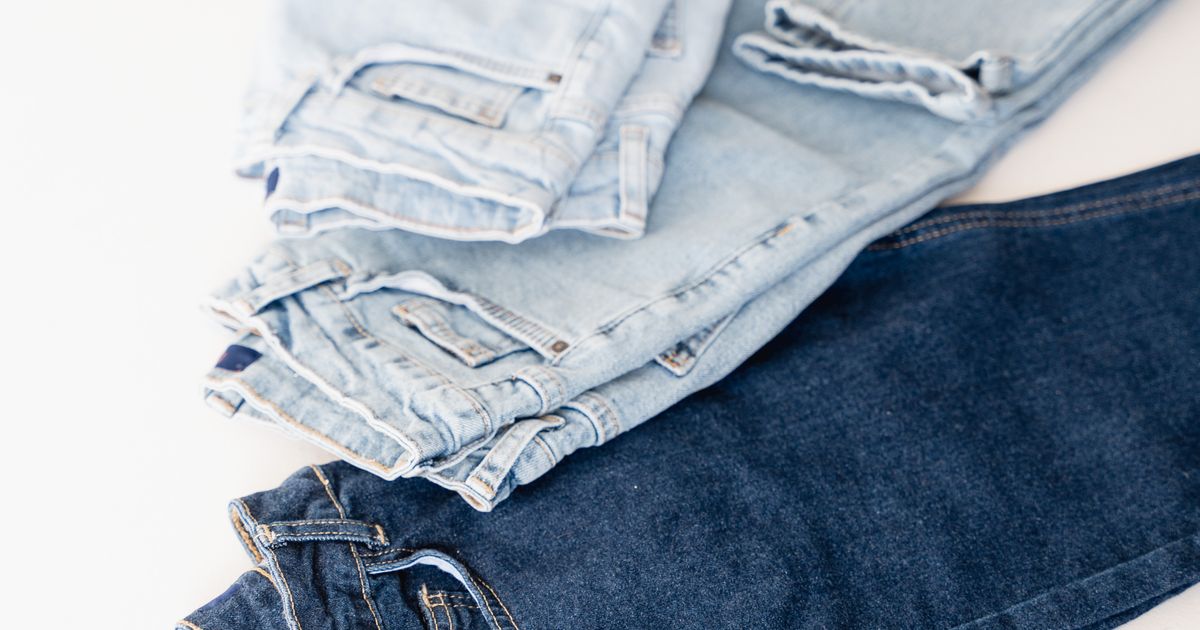
Two pairs of jeans can share a fit, a rise and a fiber content and still behave like different products, because one of them has been through a finishing process and the other has not. That is the whole of denim wash vs raw denim, and it is decided before the garment reaches a rail. This comparison looks at what each one has already done to itself, what a label is obliged to tell you about it, and what the storefront lets you sort by.
This is an independent editorial review. Diesel did not review or approve this article.
The rules described below are the ones in force where this storefront trades, and they govern disclosure rather than quality. They settle what a garment must declare about its fiber content, they leave care symbols to a voluntary system, and neither of them rates any pair of jeans.
A spec table for denim wash vs raw denim
Start with the table, because the differences are not evenly spread. Some of them are settled in a factory, some are settled in your own machine, and only one of them is a number anybody has to print.
| What you are comparing | A washed pair | A raw pair |
|---|---|---|
| Color on the day you buy it | Finished at the mill or laundry | At its darkest; changes with wear |
| Size on the day you buy it | Shrinkage largely taken out already | First wash is still ahead of it |
| Dye transfer onto seats and shoes | Mostly spent | Expect some in the early weeks |
| What the label has to declare | Fiber names and percentages | Fiber names and percentages |
| What the label need not declare | How the finish was produced | That no finish was applied |
| How a listing sorts it | Under a color name | Not sorted at all |
| Where the decisive event happens | Before you own it | The first time you wash it |
The one line on a pair of jeans that a rule stands behind
In the United Kingdom the obligation that attaches to a textile label is about composition. The Textile Products (Labelling and Fibre Composition) Regulations 2012 set up enforcement, market surveillance and offences for the retained European rule they sit on top of, and that rule is described in the Regulations themselves as being “on textile fibre names and related labelling and marking of the fibre composition of textile products”. Fiber names and fiber percentages are the subject. Nothing in that subject is about finishing.
You can see the result on a product page. One regular fit jean on the brand’s own United Kingdom storefront prints “Composition: 99%Cotton 1%Elastane-Spandex” as a flat specification, and describes the finish in a different register entirely, as a dark blue wash that “embodies Diesel’s DNA through all-over marbled and streaky effects that enhance the depth and texture of the fabric”. One of those two sentences is a declaration with a rule behind it. The other is copywriting, and it is the one carrying the information this comparison turns on.
That asymmetry is worth holding on to, because it explains why the question is hard to answer from a listing:
- The fiber split tells you about stretch and recovery, not about color.
- A percentage of elastane changes how a pair relaxes during a day, which a raw pair does differently from a washed one.
- Nothing in the required text distinguishes a garment finished at the laundry from one sent out untouched.
- Two pairs with an identical composition line can be at opposite ends of this comparison.
Reading denim wash versus raw denim on a care symbol
The second piece of printed information is the care label, and it works on a different footing. The care symbols are administered by GINETEX, an international association that owns and licenses them. Its own explanation is that “Care label symbols provide information on the maximum permitted treatment and on the proper care of textiles”, that “Milder treatments and lower temperatures than those indicated on the label are always permitted”, and that “The details are a matter for the manufacturers and must be truthful”. The same page says plainly that a care label is not a guarantee of quality, and that care performed to the label “does not guarantee that all kinds of dirt and stains will actually be removed”.
Read that carefully and denim wash versus raw denim turns into a question about a ceiling rather than an instruction. A symbol set tells you the hottest, roughest treatment a garment will survive. It does not tell you what will happen to the color at that ceiling, and on a raw pair the color is the thing at stake. It is also a voluntary system rather than a legal requirement, which is why the most specific guidance a buyer gets usually sits somewhere else entirely. Diesel publishes its own care page, and the instructions there are far more detailed than any tag: “Wash your denim as little as possible, aim for every 10 wears or longer”, with “a day in the freezer will freshen things up” in between; “Never wash above 30 degrees and always inside out on a short or delicate cycle, while using a mild detergent and avoiding fabric softener”; and “Never tumble dry. Instead, dry your jeans flat and in the shade”.
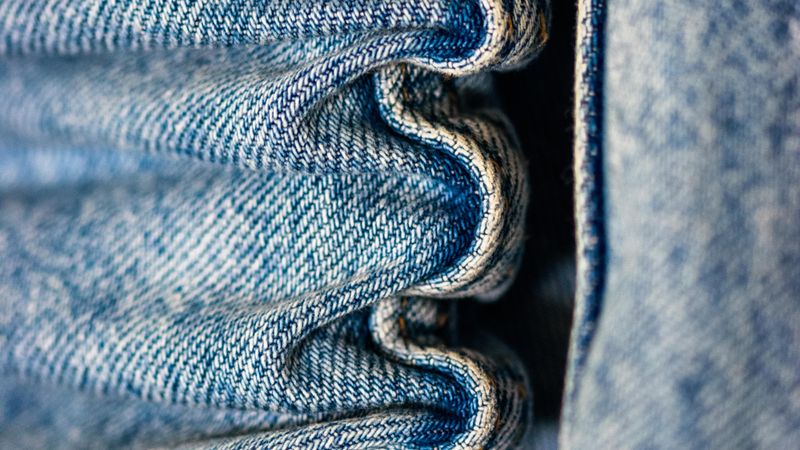
Where the difference between denim wash and raw denim first shows
Every one of those instructions is written to protect a finish. Washing cold, washing rarely, turning the garment inside out and keeping it out of the dryer are all ways of slowing down the loss of color and the movement of the fabric. The brand frames the same page around impact rather than appearance, noting that “A significant part of the impact of your denim happens when you wash, dry, iron, repair” or fail to repair, and signing off with “Remember repairing is caring”.
For a buyer, that is the practical shape of the difference between denim wash and raw denim. On a washed pair the irreversible step has already happened in a factory, so the color you try on is close to the color you keep and the fit you try on is close to the fit you keep. On a raw pair the same step is ahead of you, it happens in your own machine, and the care instruction that governs it is a web page rather than a stitched tag. The fade pattern that makes raw denim worth buying is produced by exactly the process the care advice is trying to postpone, which is a real tension and not a flaw in the advice.
What the storefront lets you sort by
This is where the comparison becomes awkward, and it is checkable in a minute. Read on 23 November 2026, the men’s denim listing on the brand’s United Kingdom site reported 209 products and carried a heading reading “Men’s Denim: Fits, Rises and Washes”. The filter panel beside it offered fits, named as regular, relaxed, slim and bootcut, and colors, named as beige, black, blue, dark blue, light blue, medium blue, two values of gray, green and military green.
Count the variables. The heading promises three. The filters deliver fit, and deliver color under names that are doing the work of a wash description without being one. There is no rise facet and no wash facet, and raw denim has no facet at all, so the one attribute this entire comparison is about cannot be sorted by anyone, on either side. A listing can describe a wash in a sentence of prose and a search panel cannot find it.
You can still look it up here, one listing at a time:
Sorting denim wash or raw denim for beginners
None of this needs expertise. Working out denim wash or raw denim for beginners is a short sequence of checks, run in order, and all of them are available before you pay.
- Read the composition line first. It is the one statement on the page with a rule behind it, and the elastane figure tells you how much the pair will move during a day.
- Read the color name next, and treat it as the nearest thing to a wash description the listing offers.
- Read the product prose for finishing words. Marbled, streaky, rinsed and similar terms are the seller telling you a finish exists.
- Look for the absence of those words. A listing that says nothing about finish, on a very dark pair, is the likeliest raw candidate.
- Check the care instruction before you buy, not after, because on a raw pair the first wash is the decision and it cannot be taken back.
If a pair has to look the same in six months as it does in the photograph, a finished wash is the safer buy. If the appeal is a pair that records how you actually wear it, raw is the point and the early dye transfer is part of the deal rather than a defect. Buyers who want neither surprise nor a project are usually better served by a mid blue that has already been through the laundry. The full range sits on the Diesel denim listing.
Related guides
- Stretch Denim vs Rigid Denim: What Diesel Sorts By
- Straight-Leg vs Slim-Fit Jeans: How Do These Styles Compare?
- Low-Rise vs High-Rise Jeans: How Do These Denim Styles Compare?
Frequently Asked Questions
Four questions come up more than any others once the label and the listing have been read.
Ques: Does a composition line tell me anything about the wash?
No. It tells you the fiber names and their percentages, which is what the labeling rule covers. Two pairs can carry an identical composition and sit at opposite ends of this comparison.
Ques: Is a care symbol a legal requirement in the UK?
The symbol system is run by an international association that licenses it, and its own guidance describes the symbols as information about the maximum permitted treatment rather than as a guarantee of quality. Treat the symbols as a ceiling, and treat any detailed care advice on the brand site as the fuller version.
Ques: Will raw denim shrink more than a washed pair?
A finished pair has usually been through the process that settles its dimensions, and a raw pair has not. Size a raw pair with that first wash in mind, and follow the cold, inside-out, no-dryer routine the brand publishes if you want the change to be gradual.
Ques: Can I filter a listing for raw denim?
Not on the listing read for this article. The filters covered fit and color, and neither the rise nor the wash appeared as a facet, so finishing has to be read from the product description one item at a time.
Bottom line
The fiber line on a pair of jeans is a declaration with a rule behind it, the care symbols are a voluntary ceiling, and the wash is a sentence of description with no standard, no number and no filter attached to it. That is why this comparison has to be made by reading, and why the honest summary is simple: buy the washed pair if you want the garment you saw, and buy raw if you want the garment it becomes.