
Two boxes arrive on the same doorstep in Germany on the same morning, and one of them promises dinner in half the time. The honest version of quick cook meal kit vs regular meal kit is not a taste test. It is a question about dates, because European labelling rules treat a whole vegetable and a chopped one as two different products.
This is an independent editorial review. HelloFresh did not review or approve this article.
The European rule quoted below describes what a food label must and must not say about dates. It is not a safety assessment of any box, it places no obligation on a reader, and anyone with an allergy or a specific dietary need should settle that with a qualified professional rather than with a buying guide.
The two boxes, side by side
This table compares what each format tends to put in the carton. It stays qualitative on purpose, because the exact contents change with every week’s menu.
| What changes | Quick cook box | Regular box |
|---|---|---|
| State of the produce | More of it arrives trimmed, sliced or part-cooked | More of it arrives whole and unpeeled |
| Knife work at home | Minutes | A real share of the stated time |
| Date marking on the pack | More components legally need a printed date | Whole, untreated produce needs none |
| How long the week keeps | Set by the shortest date in the box | Set by how you store it |
| What the time badge measures | Total elapsed time, not hands-on time | Total elapsed time, not hands-on time |
| Where it sits in the catalog | A recipe preference inside one weekly menu | A recipe preference inside one weekly menu |
Where quick cook meal kit vs regular meal kit is actually decided
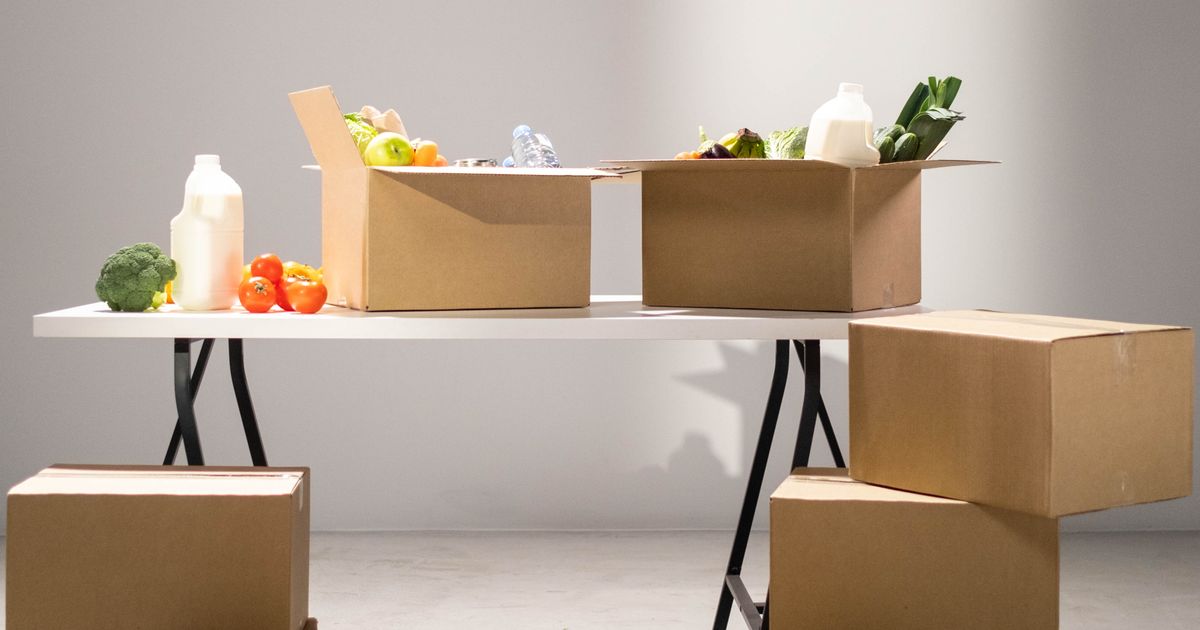
Both boxes contain the same thing in outline. The seller describes the per-dish packing as one bag of gram-exact fresh ingredients, one cool bag for the items that have to be kept refrigerated, and one envelope of recipe cards, with a general house figure of around thirty minutes for a recipe cooked from step-by-step instructions. It also says that only what has to be packed is packed.
That last line is more useful than it looks. It means the split between the loose produce and the cool bag is not a packaging choice; it tracks what the contents actually need. And the moment a kit makes itself faster, it moves items across that line, because the way to save you ten minutes of chopping is to send the chopping already done.
The rule that exempts a whole carrot and not a chopped one
Regulation (EU) No 1169/2011 on food information to consumers governs the date on the pack. Annex X sets out how a minimum durability date is written: it “shall be preceded by the words” either “Best before …” when the date includes a day, or “Best before end …” otherwise.
Then Annex X, point 1(d), lists what is exempt. A minimum durability date “shall not be required for: fresh fruit and vegetables, including potatoes, which have not been peeled, cut or similarly treated.” The derogation is written around three verbs, and all three describe the exact processing a quick cook kit performs on your behalf.
Article 24(1) sets the harder tier above that: “In the case of foods which, from a microbiological point of view, are highly perishable and are therefore likely after a short period to constitute an immediate danger to human health, the date of minimum durability shall be replaced by the ‘use by’ date.” And it closes without softening: “After the ‘use by’ date a food shall be deemed to be unsafe.”
Article 25(2) adds the part that applies once the carton is open: “To enable appropriate storage or use of the food after opening the package, the storage conditions and/or time limit for consumption shall be indicated, where appropriate.”
Line those up and the buying consequence writes itself. A whole, unpeeled onion in a regular box carries no printed date at all and keeps for as long as your kitchen lets it. The same onion, delivered diced in a sealed tub so that you save four minutes, has left the exemption. It now needs a date, and if it falls into the perishable tier that date is a use by rather than a best before, with a legal meaning attached to the far side of it. The convenience is real. It is paid for in shelf life, and the pack is where you can see the price.
A quick cook meal kit vs regular meal kit comparison starts in the cool bag
A practical quick cook meal kit vs regular meal kit comparison is done standing at the counter with the box open, in about a minute:
- Sort the contents into two piles: things with a printed date and things without
- Find the earliest date in the first pile; that is the real deadline for the whole week
- Check whether that earliest date is a best before or a use by, because they are different instruments
- Read any after-opening instruction, which is a separate and usually shorter clock
- Cook in date order rather than in menu order
Nothing in that list is on the website. All of it is on the packaging, and the faster box is the one with more of it.
The number on the card is not the number you feel
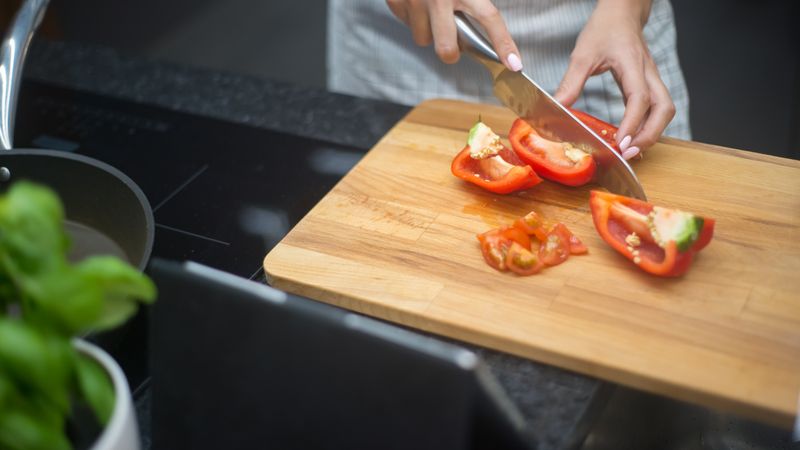
Every recipe tile in the German menu carries a time: thirty minutes, thirty-five, forty, and occasionally an hour and a half. Read the tiles closely, though, and a second number appears on some of them and not others. One card sits under a forty-minute style badge and adds, as a subtitle, that only ten minutes of that is active cooking time. That is a four-to-one gap between the number on the badge and the number you actually stand at the hob for.
Both numbers are honest and they answer different questions. Total elapsed time tells you when dinner lands. Active time tells you how much of your evening the box costs. Only the first is on every card, and the recipe index sorts by cuisine and theme rather than by either one, so the single variable a quick cook box is sold on cannot be sorted by anybody. It is also worth saying that the brand does not run quick cooking as a separate product line at all; time-saving dishes are a preference you pick inside the same weekly menu. You can see the current menu here:
Check Best Deals on HelloFresh
Asking quick cook meal kit or regular meal kit which is better
Asked in the abstract, quick cook meal kit or regular meal kit which is better cannot be answered. Asked against your own week it is five quick decisions:
- Count the evenings you will genuinely cook. The box is sized by people and by number of recipes, from two to four people and two to five dishes, so the honest number matters more than the ambitious one.
- Pick the delivery day that sits closest to your first cooking night, not the one that is most convenient to receive.
- If you will be out when it lands, note that unattended drop-off is an option, then look again at the earliest date in the box before you choose it.
- Read the active time, not the badge, on any recipe you are buying for speed.
- Remember that changes run to the previous week’s order deadline, so a plan that changes on Thursday is a plan you cannot act on.
What a quick cook meal kit vs regular meal kit review tends to skip
A typical quick cook meal kit vs regular meal kit review of a box from HelloFresh compares recipes and portion sizes, and skips the two things above: the date marking that comes with convenience, and the gap between elapsed time and active time. Both are checkable, both are free to check, and neither counts against the product. They are simply the two specifications that decide whether the faster box is worth it for you.
On scope: hellofresh.de is operated by HelloFresh Deutschland SE & Co. KG, registered in Berlin at the Amtsgericht Charlottenburg, and the service delivers across Germany to a chosen slot, with a weekly pause option and no minimum term. Prices on the German site are quoted in euros and are not reproduced here, partly because the per-portion table published on the menu page is footnoted as first-box pricing with a new customer discount applied, which makes every figure in it a promotional rate rather than a standing one.
Related guides
- Meal Kit for Families vs Grocery Shopping
- Ready to Cook vs Prepared Meals
- Frozen Meal Delivery vs Meal Kit
Frequently Asked Questions
These four land on the packaging rather than on the website.
Ques: Is a use by date just a stricter best before?
No. They are two different instruments. A minimum durability date is about quality holding up; the regulation replaces it with a use by date for foods that are highly perishable from a microbiological point of view, and says a food is deemed unsafe after that date.
Ques: Why do some items in the box carry no date at all?
Because fresh fruit and vegetables that have not been peeled, cut or similarly treated are exempt from the minimum durability requirement. Whole produce is the part of the box the rule leaves alone.
Ques: Does a faster recipe mean less cooking or less waiting?
Check both numbers. The badge on a recipe card is total time. Some cards add an active cooking time underneath, and on at least one card that figure is a quarter of the badge.
Ques: Can I plan the whole week from the website?
Only partly. The site sets the menu, the box size and the delivery slot. The order you cook the dishes in is set by the dates printed on the packs, and those are visible only once the box is open.
Check Best Deals on HelloFresh
Bottom line
Buy the faster box for the evenings you would otherwise skip cooking altogether, and cook it early in the week, because the processing that saves you the chopping is the same processing that puts a date on the pack. Buy the regular box when the week is loose, and let the whole produce do what a date-free ingredient does best, which is wait for you.