
A gift box of bamboo and ceramic sits next to a plain tin of green powder, and both are sold as the sensible way to start. The choice between an organic matcha starter set vs loose matcha powder is usually framed as convenience against value, which skips the more useful question: of everything in that box, how much of it can the word organic actually describe? This comparison reads the European rule that governs the word, then reads what Matcha Magic puts in its own set listings.
This is an independent editorial review. Matcha Magic did not review or approve this article.
The European regulation quoted below governs a word on a label. It is not a quality grade, it says nothing about how good any tea tastes, and it is quoted here because it is the only part of this purchase that comes with something a buyer can look up.
What is actually inside each option
This table compares the two formats on attributes a listing can be checked against, not on anything either side claims about flavor.
| What you are comparing | Starter set | Loose powder |
|---|---|---|
| What you mainly pay for | Ceramic and bamboo | Tea |
| What the organic claim can cover | The tea inside it, if any | The whole product |
| Control body code to look up | Published site-wide by this seller | Published site-wide by this seller |
| Choice of grade | Fixed by the set, where tea is included | Chosen per product |
| What varies between options | Color of the bowl and holder | Grade and quantity |
| Replacing one part later | Accessories are sold individually | Reorder the same tin |
| Who it suits | A first kit, or a gift | A refill, or a second grade |
Where organic matcha starter set vs loose matcha powder is settled
Most of a set is not food. Reading organic matcha starter set vs loose matcha powder as a single product comparison hides that, because only one of the two is a thing the organic rules can attach to in the first place.
Regulation (EU) 2018/848 is written about agricultural products and about the words used to sell them. It allows the protected terms and “their derivatives and diminutives”, which is how the German word bio and the prefix eco become regulated vocabulary rather than marketing adjectives. It then closes the obvious gap, barring any term, including one used in a trademark or a company name, that is “liable to mislead the consumer or user by suggesting that a product or its ingredients comply with this Regulation”.
A bowl is not an ingredient. A bamboo whisk is not an ingredient. So in a box of four implements and one optional tin, there is exactly one item the word can be doing work on.
The two things an organic food label has to carry
This is where the rule becomes useful at the shelf rather than interesting in theory. Where a product carries organic terms, Article 32 requires the label to show “the code number of the control authority or control body to which the operator that carried out the last production or preparation operation is subject”, and requires that for prepacked food “the organic production logo of the European Union referred to in Article 33 shall also appear on the packaging”.
Article 32 then adds the part most shoppers never notice. Where that logo is used, “an indication of the place where the agricultural raw materials of which the product is composed have been farmed shall appear in the same visual field as the logo”, in one of three forms: EU Agriculture, non-EU Agriculture, or EU/non-EU Agriculture.
- The code number tells you which body inspected the operator. It is a string you can look up, which is more than any adjective gives you.
- The farmed-origin line is a one-word fact about the leaf. Japanese matcha sold in the European Union falls on the non-EU side of that choice, and the indication has to sit beside the logo rather than on a different panel.
- Neither duty reaches a whisk, a scoop or a holder, because neither duty is about tools.
What the Matcha Magic set listings publish
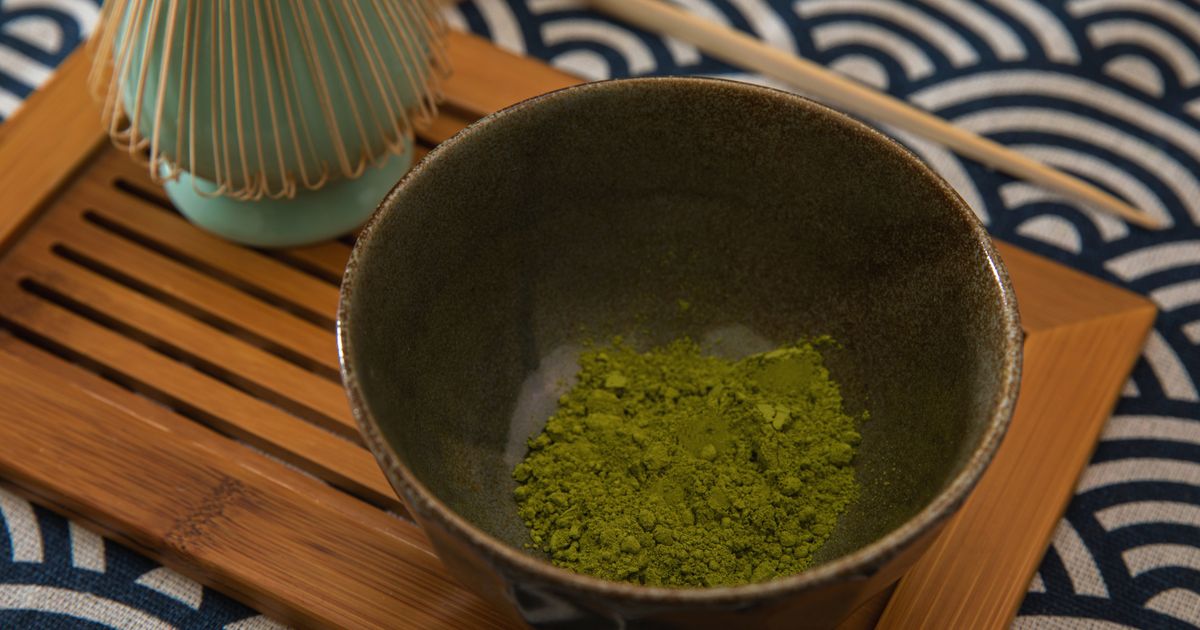
Read on November 18, 2026, the matcha sets collection at Matcha Magic listed ten sets. Every one of them is the same four items, described as a handmade bowl, a bamboo whisk, a whisk holder and a scoop, and the ten differ from each other by color name alone. The seller publishes its control body as DE-ÖKO-022 on the home page, on that collection page and in its company information.
The decisive detail is in the variant list rather than the description. Each set is sold in three versions: without matcha, with a 30 gram tin, and with an 80 gram tin.
- A set bought in its first version contains no tea at all, so the organic claim has nothing in the box to attach to.
- Where tea is included, the listing names Gourmet as the included grade, which the seller describes as its premium quality tier rather than one of its ceremonial ones.
- The same implements are sold individually in the accessories range, which carried 22 products on the same day, so the set is a bundle rather than a different object.
None of that is a complaint about the bundle. It is simply the difference between a box and a food, and it is visible in the seller’s own data without asking anybody.
You can check current options here:
Check Best Deals on Matcha Magic
An organic matcha starter set vs loose matcha powder comparison that holds up
Once the box and the food are separated, an organic matcha starter set vs loose matcha powder comparison stops being a price argument and becomes two unrelated decisions made at the same moment.
The first decision is hardware. A wide flat-bottomed bowl and a many-pronged bamboo whisk do a job a mug and a fork cannot, and that job does not change with the tea. Hardware is bought once, replaced rarely, and chosen on shape and on how it feels in the hand.
The second decision is the tea, and it is bought again every few weeks. Grade, harvest and origin all belong to that decision, and none of them is settled by which bowl came in the box. Keeping the two apart is what stops a gift box from quietly choosing your tea for the next year.
Settling organic matcha starter set or loose matcha powder which is better
There is no general answer, only a situational one. The question of organic matcha starter set or loose matcha powder which is better turns on one thing: do you already own the tools.
- Check your cupboard for a whisk and a wide bowl. If both are there, a set is mostly a second set of the same things.
- Decide the grade you want before you look at any bundle, so the bundle does not decide it for you.
- Read the variant list on the set and see whether tea is included and at what weight.
- Find the control body code and the farmed-origin wording on the tea you intend to drink, not on the box it arrives in.
- Check whether the individual pieces are sold separately, because that is what a replacement will cost you later.
What an organic matcha starter set vs loose matcha powder review usually leaves out
Reviews tend to photograph the box. An organic matcha starter set vs loose matcha powder review rarely mentions that the same seller sells every implement individually, and almost never mentions that a set can ship without any tea in it.
The other omission is the refill. A starter set is a one-time purchase and a tin is a recurring one, so the second tin is where the real running decision sits. By then the bowl is already on the shelf, and the only variable left is the tea.
Related guides
- Ceremonial Matcha vs Culinary Matcha: Matcha Magic
- Ready to Cook Meals vs Prepared Meals: Marley Spoon
- Frozen Plant Based Meal Delivery vs Meal Kit: Daily Harvest
Frequently Asked Questions
Four questions come up once the box and the tea are treated as separate purchases.
Ques: Does the organic claim cover the bowl and the whisk?
No. The European organic rules are written about agricultural products and the words used to sell them, and their labeling duties attach to food. A ceramic bowl and a bamboo whisk are tools, so the claim in a set name can only be describing the tea inside it.
Ques: What is the control body code for?
It identifies the body that inspected the operator which carried out the last production or preparation step, and Article 32 requires it to appear on the label where organic terms are used. Matcha Magic publishes DE-ÖKO-022 across its own pages.
Ques: Can a starter set arrive without any tea?
On this storefront, yes. Every set in the collection offers a version without matcha alongside two versions that include a tin, so the tea is an option on the set rather than part of it.
Ques: Is a set cheaper than buying the pieces separately?
That depends on the day and is not something a buying guide should state as fact. What can be checked is that the same whisk, scoop, holder and bowls are listed individually in the accessories range, so the comparison is available to anyone before ordering.
You can see the current lineup on Matcha Magic and read the variant lists for yourself:
Check Best Deals on Matcha Magic
Bottom line
A set is hardware with an optional tin in it, and the regulated word on the label can only ever be describing that tin. Choose the bowl on shape, choose the tea on its own code and origin line, and do not let one of those choices make the other.