
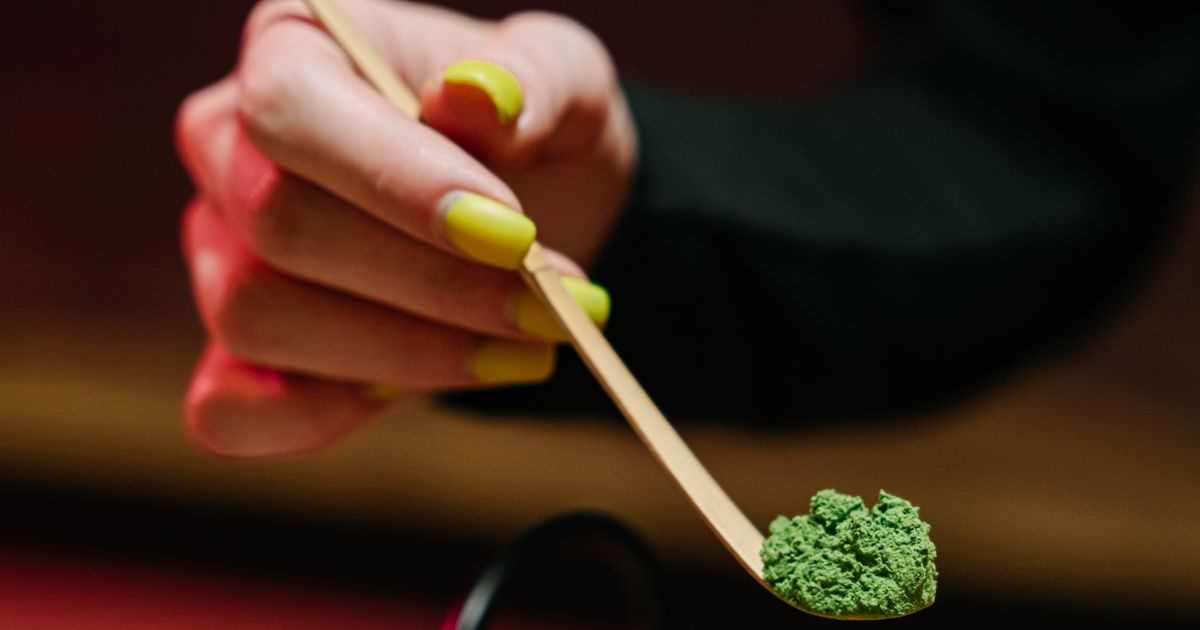
Two tins of bright green powder, two grade words, and no authority anywhere that defines either one. ceremonial matcha vs culinary matcha is sold as a quality ladder, and the most useful sentence on the subject turns out to be printed by the seller itself, which sets out both definitions and then tells you the designation is not the deciding factor.
This is an independent editorial review. Matcha Magic did not review or approve this article.
No standard and no public grading scheme sits behind the two words compared here, which is the subject of this article rather than a gap in it. Everything below was read on the seller’s own German storefront on 2026-11-05, nothing here is nutrition advice, and anyone changing what they drink for a reason to do with their own wellbeing should take that up with a qualified professional rather than with a shop page.
Reading ceremonial matcha vs culinary matcha in one table
The table sets out the variables the seller actually publishes, which is a shorter list than the marketing vocabulary suggests.
| What is published | What it tells you |
|---|---|
| Grade word | Points at an intended use, and the seller says it is not the deciding factor |
| Origin | A single named prefecture, or a blend across farms |
| Harvest | First picking, and whether the leaves were hand-picked |
| Shading | Two stages on both tiers, at different percentages and for different spans |
| Fineness | A mesh figure on one listing and nothing on the other |
| Milling | Granite stone, at roughly thirty grams an hour on both |
The seller defines both words and then declines to sort on them
The storefront answers the question directly in its own help section. Ceremonial grade, it says, refers to particularly fine qualities that, due to their mild and balanced taste, are especially suitable for pure enjoyment. Culinary grade usually tastes stronger and is therefore particularly well-suited for matcha lattes, smoothies, as well as for cooking and baking. Then comes the sentence that reframes the whole aisle: However, the deciding factor is not just the designation, but above all the actual quality of the leaf material, the processing, and the intended use.
The shelf confirms it. The matcha collection as it stood on 2026-11-05 groups its pure-enjoyment range under four separate labels, including a traditional quality, a ceremonial grade, a ceremonial quality and a ceremonial premium quality, with the cooking range held apart under a culinary heading and two named products. The word ceremonial is doing duty across three different tiers at once. It is a family of labels rather than a line on a scale, and a buyer comparing two tins from different shops has no way to line them up.
Where a ceremonial matcha vs culinary matcha comparison has something to measure
A ceremonial matcha vs culinary matcha comparison gets useful the moment you stop reading the grade word and start reading the production detail, because the two listings publish genuinely different things.
- Origin. The ceremonial listing names a single prefecture and says every leaf comes from that one growing area. The traditional listing describes tea masters blending leaves from several farms.
- Why the blend exists. The seller gives its own reason, saying the process guarantees a consistent taste from year to year.
- Shading. Both are shaded in two stages before harvest, but the published percentages and the number of days differ between the two listings.
- Fineness. One listing prints a mesh figure. The other prints none at all.
- Milling. Both state granite stone mills at roughly thirty grams an hour, so this one is not a differentiator on this shop.
Asking ceremonial matcha or culinary matcha which is better gets a harvest answer
Framed as a ranking, ceremonial matcha or culinary matcha which is better has no answer, because the two tiers are not trying to do the same job. Framed as a sequence of checks, it resolves quickly.
- Decide how you will drink it. Whisked with water alone, bitterness has nowhere to hide. Under milk or in a batter, a stronger leaf is the point.
- Read the origin line before the grade word. Single origin and blended are different promises, and neither is automatically better.
- Check the harvest. A first picking is stated plainly where it applies, and hand-picking is stated separately from it.
- Compare the shading figures rather than the adjectives, since both listings publish them.
- Look for a fineness figure. Where one is absent, treat fineness as unstated rather than as implied by the tier name.
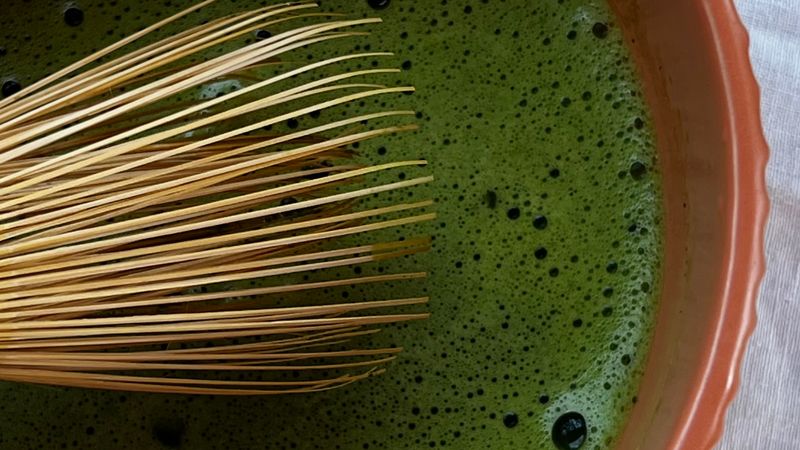
On the preparation side the shop is specific and the amounts are modest: one to two grams of powder into a bowl, water at roughly eighty degrees Celsius, whisked with a bamboo chasen until the surface is evenly frothed, with more powder used for a latte. That instruction is identical across the tiers, which is another quiet sign that the grade word is about leaf and taste rather than about method.
The matcha range sits here:
Check Best Deals on Matcha Magic
The part a ceremonial matcha vs culinary matcha review rarely prints
A ceremonial matcha vs culinary matcha review will usually test the taste and the color of the liquid and stop there. Two things sit outside that test and both are on the page already.
The first is storage, which the shop treats as part of the product rather than as advice. Matcha is described as sensitive to light, heat, air and moisture, with the packaging to be resealed tightly and kept cool and dark, and the sealed pack allowed to reach room temperature before opening so that condensation does not form on the powder. A tier bought for its delicacy and then left open on a sunny worktop is not the tier you paid for.
The second is that the growing regions named on Matcha Magic are not consistent from page to page. The quality statement names Kagoshima and Uji, the matcha collection heading names Miyazaki and Kagoshima, and the ceremonial listing names Miyazaki alone. None of those is wrong for the product it describes, and together they are a useful reminder that a region named in a banner is not a region named on a tin. Read the listing for the item in the basket.
What to read on the tin
- The origin line on the product itself, not the one in the category banner.
- Whether the harvest is stated, and whether hand-picking is claimed separately.
- The two shading figures, which are the most concrete numbers either listing carries.
- Whether a fineness figure appears at all.
- The seal and the packaging format, since the storage instruction is the same for every tier.
For the record on where you are buying from: the shop serves the German market in German and English, describes itself as the official branch of its Japanese parent, gives a returns address in Kulmbach, states a commercial register entry at the Local Court of Bayreuth under HRB6315, and carries organic certification from a named German control body.
Related guides
- Meal Replacement Shakes vs Protein Shakes
- Greens Powder vs Multivitamin
- Fiber Supplement vs Dietary Fiber From Food
Frequently Asked Questions
None of what follows can be settled by a grade word alone, and the shop says as much itself.
Ques: Is ceremonial grade a regulated term?
Nothing on the storefront points to a scheme that defines it, and the shop’s own answer says the designation is not the deciding factor. Treat it as a seller’s description of intended use, then read the production detail underneath it.
Ques: Can I bake with the higher tier?
You can, and the delicacy you paid for is largely lost under sugar, flour and heat. The shop points its stronger, more aromatic range at cooking and baking for exactly that reason.
Ques: Does single origin mean better?
It means traceable to one growing area. The blended side is described by the seller as deliberate, to hold a consistent taste from year to year, which is a different goal rather than a lesser one.
Ques: Why does one listing give a mesh figure and the other not?
Only the shop can say. The practical response is to take fineness as published where it is published and unstated where it is not, rather than inferring it from the tier name.
Check Best Deals on Matcha Magic
Bottom line
The grade word tells you what the seller thinks you will do with the powder, and the seller says plainly that it is not the deciding factor. Buy on origin, harvest, shading and fineness, and let the intended use pick the tier.