
One of these is defined in American law and the other is not, and the definition runs the opposite way to the marketing. Put the waterproof hiking boots vs trail running shoes question to the only federal document that defines either term and it answers by putting them in the same box, then reserves the word waterproof for a third kind of shoe entirely.
This is an independent editorial review. Cabela’s did not review or approve this article.
Chapter 64 of the United States tariff schedule, quoted below, is a customs classification document. It sets duty rates and statistical categories for imported goods, it makes no claim about how well any shoe performs on a trail, and it is quoted here because it is the one place where the words in this comparison carry a written definition at all.
Reading waterproof hiking boots vs trail running shoes in one table
The comparison is usually sold as waterproof against breathable. The useful axes are different.
| What you are comparing | Waterproof hiking boots | Trail running shoes |
|---|---|---|
| What the retailer grades them on | Load carried and days out | Load carried and days out |
| Cut and ankle support | Mid to high shaft, maximum support | Low cut, limited support by design |
| Water protection method | Liner or laminate, plus fewer seams | Coating or laminate on textile, or none |
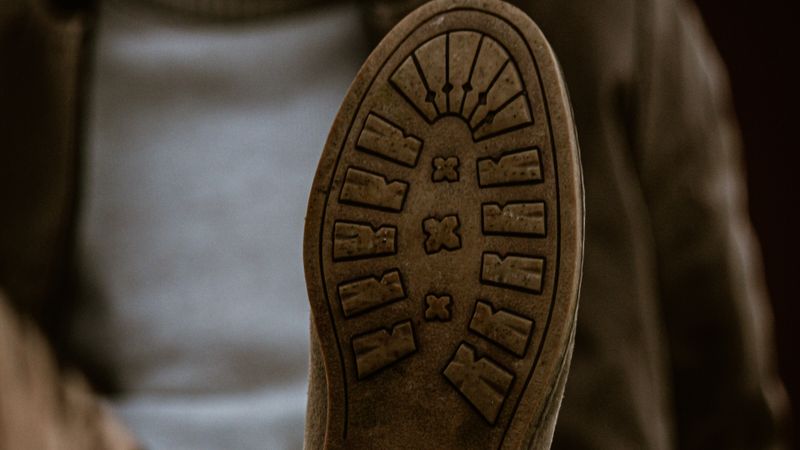
| Tread intent | Deeper, longer lugs that shed mud | Conservative lugs for maintained trails |
| Break-in | Longer, especially on leather | Short |
| Classified in law as | Protective active footwear, if laminated | Protective active footwear, if laminated |
| Legally waterproof footwear | Usually not, because it is stitched | Usually not, because it is stitched |
The only official definition puts both of them in the same box
The Harmonized Tariff Schedule of the United States has a whole chapter for footwear, Chapter 64, and two of its Additional U.S. Notes do something unexpected to this comparison. It is worth naming the chapter precisely, because the network of tariff chapters that cover apparel are a different set of rules about different goods; this one is only about shoes.
Additional U.S. Note 6 defines a term called protective active footwear, and the definition reads as footwear that is designed for outdoor activities, such as hiking shoes, trekking shoes, running shoes, and trail running shoes, above a stated value per pair, which provides protection against water that is imparted by the use of a coated or laminated textile fabric. Both halves of this article sit inside one defined term. The water condition attached to it is not a performance rating; it is a description of a material.
Then Note 3 does the harder thing. It confines the phrase waterproof footwear to a single heading, defining it there as footwear designed to protect against penetration by water or other liquids, whether or not such footwear is primarily designed for such purposes. And that heading has its own entry requirement, printed in the schedule: Waterproof footwear with outer soles and uppers of rubber or plastics, the uppers of which are neither fixed to the sole nor assembled by stitching, riveting, nailing, screwing, plugging or similar processes.
Read that twice. For the one official purpose where the word has a definition, waterproof footwear means a rubber or plastic shoe whose upper is not stitched or nailed to the sole. A leather hiking boot with a waterproof membrane, sewn together in the normal way, is not waterproof footwear in that sense at all, however dry your feet stay. The rubber boot in the mud room is. The word on the box and the word in the schedule are measuring construction and performance respectively, and only one of them is written down.
Where a waterproof hiking boots vs trail running shoes comparison is decided by seams
Once construction is the axis, a waterproof hiking boots vs trail running shoes comparison starts to look like a plumbing problem. The retailer’s own hiking boot guide is unusually direct about it. On the protection itself it states that Waterproof liners and laminates applied to seals and uppers 100% block water from soaking through to your feet, while treatments that merely shed water stop working once the boot is saturated. On breathability it explains the mechanism rather than the claim: Most high-quality waterproof treatments make the fabric weave smaller than a water molecule, but large enough for air to escape through.
The seam count then does the rest. The same guide notes that While stitched soles are easier to replace, glued or cemented soles are lighter and more flexible, and says of one midsole construction that these midsoles are more waterproof than soles with stitching because there are fewer seams. That is the tariff schedule’s logic arriving from the commercial side: water gets in where the shoe is joined, not where it is woven.
It is also how the guide tells you the protection has failed. Replace the boots, it says, if water begins to seep in, which it calls a sign the waterproof treatment has been compromised or the seams are unsealing, or if The soles are worn smooth (lugs are gone) and no longer provide adequate traction.
- Single-piece uppers and cemented soles have fewer places to leak than stitched, multi-panel uppers.
- A membrane does nothing for the seam it is sewn beside, which is why taped seams are a specification worth finding.
- Suede is a real exception the guide spells out, describing it as Flexible and breathable, but not as supportive and definitely not waterproof.
- Harder is not always better underfoot: the guide warns that Note that extra-hardened outsoles can feel slippery if you go off trail.
Asking waterproof hiking boots or trail running shoes which is better gets a load answer
The retailer does not sort this aisle by water at all. Ask waterproof hiking boots or trail running shoes which is better and its guide answers with three grades, and every one of them is defined by how much you are carrying and how many days you are out.
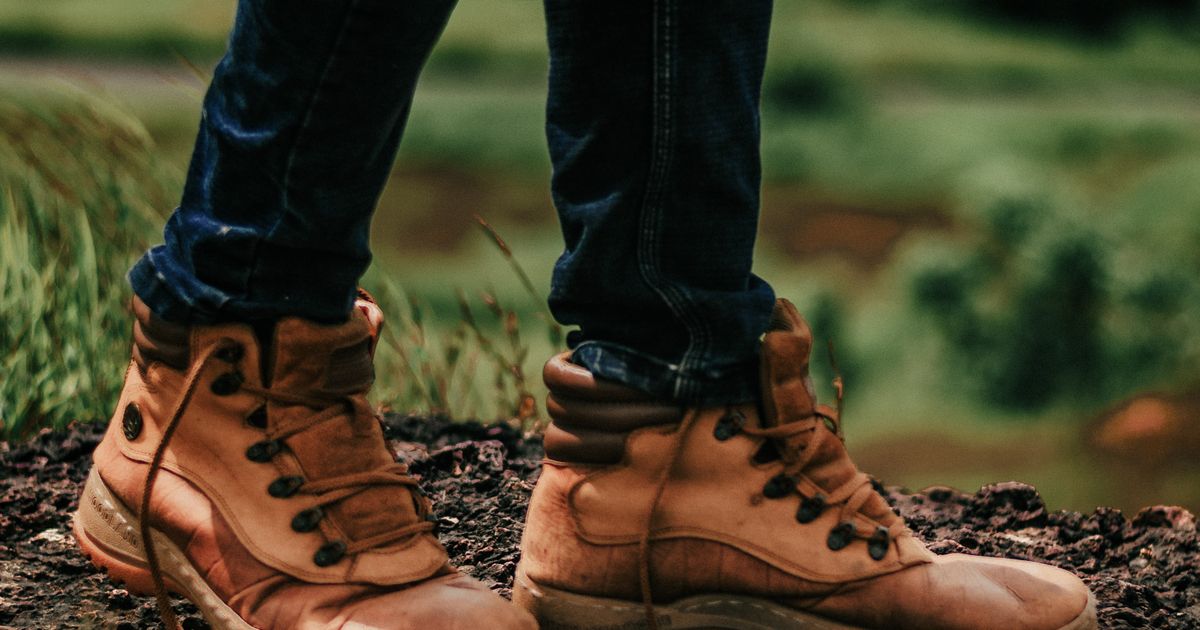
The light and active grade is described as These beefed-up running shoes are designed for one- to two-day hikes that involve carrying a light load, with limited ankle support due to lower cuts and, in the guide’s own words, Conservative tread and lugs make these best for maintained trails. The midweight grade is The most versatile of hiking-boot options. The heavy grade is Designed for multiple days on the trail or deep backcountry trips with extreme terrain and the most relentless weather, where high-shaft leather uppers provide maximum ankle support.
And here is the line that dissolves the question. Describing the midweight boot, the guide says it comes in low, mid and high heights, making them ideal not only for hiking but trail running, fastpacking and training. Trail running is not the opposite of a hiking boot in the seller’s own taxonomy. It is one of the jobs the middle grade already does.
You can see the current range on Cabela’s, where the hiking category and the trail category sit beside each other rather than on opposite sides of the aisle.
The current range is listed here:
What a waterproof hiking boots vs trail running shoes review leaves out
A waterproof hiking boots vs trail running shoes review almost always ranks models. Three variables sit underneath the ranking and move the outcome more.
The sock is part of the system
The guide treats it as equipment rather than an accessory, warning against all-cotton hiking socks because these retain moisture instead of wicking it away from your skin. A membrane that keeps rain out and a sock that holds sweat in produce the same wet foot by two different routes.
Break-in is a scheduling cost
Synthetic uppers are described as quick drying with a shorter break-in and as liable to wear out sooner than leather; the heavy grade is flagged for longer break-in periods. If the trip is in ten days, that is a specification, not a footnote.
The failure you can see is the one on the bottom
Water ingress and worn lugs are the two replacement triggers the guide names, and only one of them is visible before you get wet. Checking the lugs on an old pair before a trip tells you more than any claim on a new box.
What to check on the box
Five things, in this order: the cut, because the cut decides ankle support and nothing else on the box will; whether the water protection is a liner or laminate rather than a surface treatment; whether the seams are taped; whether the sole is stitched or cemented, which tells you both the leak risk and the repairability; and the lug depth, which is the spec you will be judging again in two years.
- Decide the heaviest load and the longest day you will actually walk.
- Pick the grade from that, not from the weather forecast.
- Then choose the water protection, because it is a material option inside every grade.
- Fit last, in the afternoon, in the socks you will hike in.
Related guides
Frequently Asked Questions
Four questions follow from the definitions above.
Ques: Does waterproof on a boot box mean anything official?
Not in the sense the tariff schedule uses. There the term is reserved for rubber and plastic footwear whose upper is not stitched to the sole, which excludes most hiking boots. On a listing it describes a liner or laminate instead.
Ques: Can trail running shoes be waterproof too?
Yes, by the same method. The customs definition of protective active footwear names trail running shoes alongside hiking shoes and ties its water condition to a coated or laminated textile, not to a shoe type.
Ques: If both can be waterproof, what am I really choosing?
Cut and stiffness. The retailer grades its range by load and days out, which is another way of saying ankle support, midsole stiffness and lug depth.
Ques: Is a waterproof boot hotter?
It can be, which is why the guide tells shoppers to insist on breathability alongside the membrane and describes exactly how a good treatment passes air while blocking water.
The current range is listed here:
Bottom line
Water protection is a material option available on both sides, so it cannot be the thing that decides between them. Choose on cut, stiffness and lug depth, which is how the seller grades the aisle and how the law groups the shoes, then add the membrane to whichever grade the load and the days point at.