
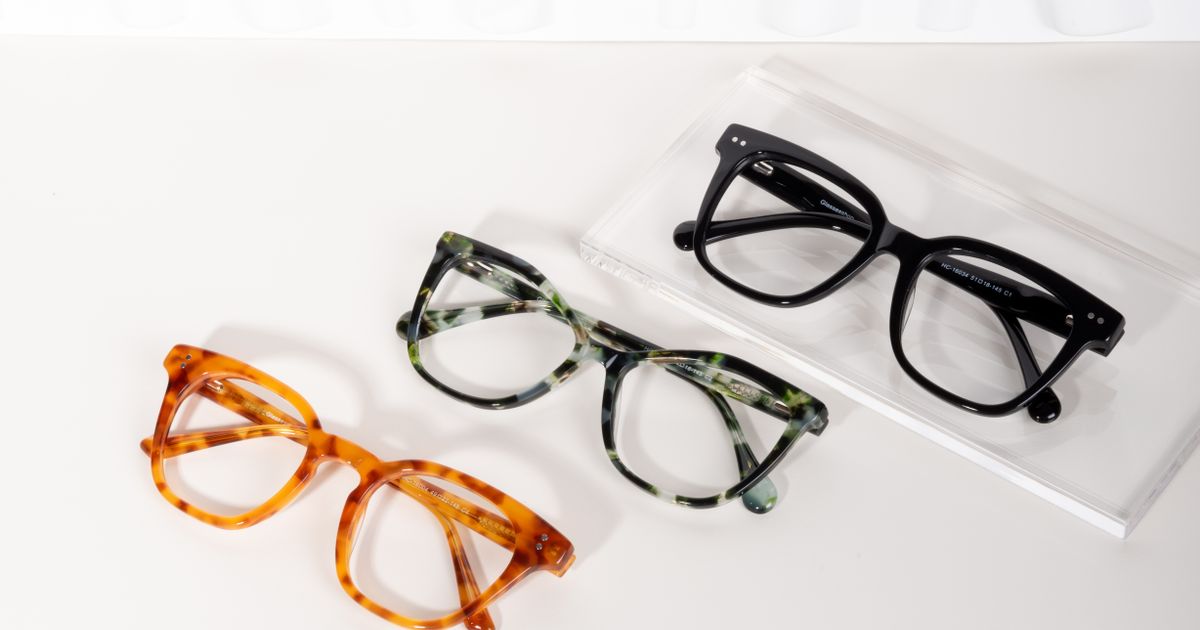
A pair from the pharmacy rack and a pair made from an eye exam can look identical on your nose. The difference in prescription vs reading glasses is in the lenses: one pair is a simple magnifier with the same power in both eyes, and the other is made to the measurements of your own eyes. This guide compares the two for US shoppers who buy through retailers such as EZContacts.
This is an independent editorial review. EZContacts did not review or approve this article, and other brands are named only as reference points.
This article is general information and not medical advice. An eye exam is the only way to know what your eyes need.
Comparison table: prescription and reading glasses
| Point | Prescription glasses | Over-the-counter readers |
|---|---|---|
| Lens power | Set for each eye separately | Same in both lenses |
| What it corrects | Near, distance, astigmatism or a mix | Close focus only |
| Astigmatism | Corrected | Not corrected |
| Lens centering | Matched to your pupils | Set for an average face |
| Where you get them | After an exam, from an optician or online retailer | Off the shelf, no exam needed |
| Cost pattern | Higher | Low |
What prescription vs reading glasses means for your eyes
The key point in prescription vs reading glasses is personal fit. Few people have two identical eyes. A prescription pair gives each eye its own power and can correct the uneven focus of astigmatism. Store readers assume both eyes need the same boost and nothing else.
What reading glasses do
Ready-made reading glasses add plus power for close work, usually sold in steps from about +1.00 to +3.50. They help with presbyopia, the gradual loss of near focus that many adults notice in their forties.
- Cheap enough to keep several pairs around the house.
- Fine for short tasks such as menus and labels.
- Blurry for distance, so they are not for walking around or driving.
What prescription glasses add
Custom prescription glasses are ground to the numbers on your eye exam. They can correct distance, near or both, balance two different eyes and place the optical center of each lens in front of each pupil.

That precision is why long reading sessions tend to feel easier in a prescription pair than in a rack pair of the same nominal strength.
Check Best Deals on EZContacts
Where progressive lenses come in
If you need help at more than one distance, progressive lenses blend distance, middle and near power in one lens with no visible line. They are prescription only. They replace the habit of swapping between distance glasses and readers, at a higher cost and with a short period of getting used to them.
Why pupillary distance matters
Your pupillary distance is the gap between the centers of your pupils, measured in millimeters. A prescription lens is centered using that number. Readers are built to an average, so anyone with a narrow or wide measurement looks slightly off-center through them, which can cause eye strain over time. Online retailers ask for this measurement when you order prescription lenses.
- Notice if one eye sees print more clearly than the other.
- Notice headaches or tired eyes after reading in store readers.
- Check if distance vision has also changed.
- Book an eye exam if any of these apply.
- Ask for a copy of your prescription and your pupillary distance.
Related guides
Frequently Asked Questions
General answers only. An eye doctor can give advice for your own eyes.
Ques: Will store readers damage my eyes?
They are not known to cause harm, but the wrong strength or poor centering can cause strain and headaches. They also do not replace regular eye exams.
Ques: How do I know what strength of readers I need?
Try reading small print at a comfortable distance and pick the lowest power that makes it clear. An exam gives a precise answer.
Ques: Can I order prescription reading glasses online?
Yes. You need a current prescription and your pupillary distance, and you choose single vision lenses set for near work.
Ques: Can I wear readers over contact lenses?
Many people do, using contacts for distance and readers for close work. Ask your eye doctor if that suits you.
Check Best Deals on EZContacts
Bottom line
Store readers are simple magnifiers for short tasks, and prescription glasses are made for your two eyes and your pupil spacing. If reading is tiring or one eye lags behind the other, an exam and a prescription pair are the next step.