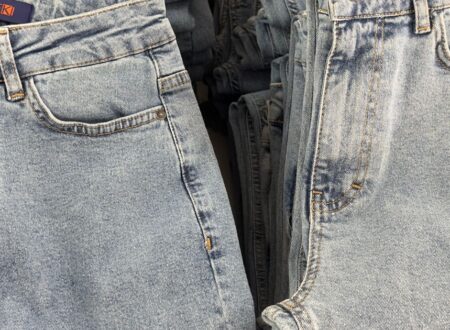


Two numbers on a leather patch cause more fitting room confusion than any others in denim. The question of levis 501 vs 511 is a question of shape: one is the original straight jean with a button fly, and the other is a modern slim cut that sits lower and closer. This guide compares the two fits for UK shoppers ordering from the Levi’s store.
This is an independent editorial review. Levi’s did not review or approve this article, and other brands are named only as reference points.
Comparison table: 501 and 511
| Point | 501 | 511 |
|---|---|---|
| Fit name | Original | Slim |
| Rise | Sits at the waist | Sits below the waist |
| Seat and thigh | Regular | Slim |
| Leg | Straight from knee to hem | Narrow from knee to ankle |
| Fly | Buttons | Zip |
| Fabric | Often rigid cotton denim | Usually denim with some stretch |
| Overall look | Classic and roomy | Clean and close |
How levis 501 vs 511 differ from waist to hem
Lay the two flat and levis 501 vs 511 is easy to see. The 501 has a higher waistband, more room in the seat and thigh, and a leg that drops straight down. The 511 starts lower, follows the thigh and keeps narrowing to the ankle. In the same waist size, the 511 will feel tighter everywhere below the belt.
What levis 501 jeans are known for
The levis 501 is the brand’s founding style, with roots in the riveted work trousers of the 1870s. Its straight leg and mid-weight denim suit almost any build, and the shape works with boots, trainers and loafers.
- Room in the thigh for larger legs.
- Rigid versions soften and mold to you over months.
- Women’s and cropped versions follow the same idea with adjusted proportions.
What levis 511 jeans are built for
The levis 511 came much later, as slimmer denim took over in the 2000s. It gives a neat outline without the squeeze of a skinny jean, and the stretch in most versions keeps it comfortable when sitting.
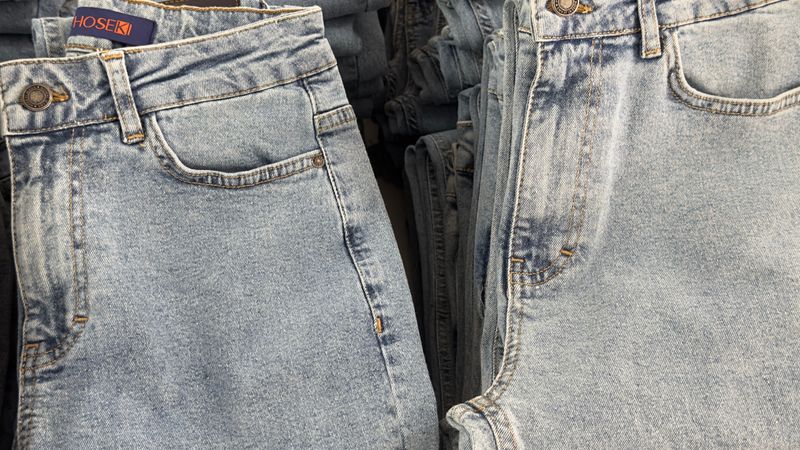
If you have muscular thighs, the 511 may pull across the leg. In that case a tapered or athletic cut is usually a better match than sizing up.
Why button fly jeans feel different
The fly is more than a detail. On button fly jeans such as the 501, a row of metal buttons replaces the zip. It lies flat, lasts for decades and takes a few seconds longer to fasten. Some people love the look, and others find it fiddly. The 511 uses a standard zip.
How slim fit jeans size against a straight pair
When moving between a straight pair and slim fit jeans, do not assume your size carries over. Stretch denim gives a little, and rigid denim does not. Use this order when ordering online.
- Measure your waist where each jean will sit: at the waist for the 501, lower for the 511.
- Check the size chart on the product page for that exact style.
- Read the fabric line for stretch content.
- Check the inseam against a pair you already own.
- Read the returns terms before ordering two sizes to compare.
Related guides
- Stretch Denim vs Rigid Denim: What Diesel Sorts By
- High Rise Jeans vs Mid Rise Jeans: Buckle
- Everyday Blazer vs Suit Jacket: Hugo Boss
Frequently Asked Questions
Fit questions that come up whenever these two styles are compared.
Ques: Should I take the same size in both?
Start with the same waist size and check the chart. Many people keep their size in the 511 because of the stretch and find rigid 501s snug at first.
Ques: Which is better for bigger thighs?
The 501. Its regular seat and thigh give more room than the slim cut.
Ques: Do 501s shrink?
Most are pre-shrunk and change little. Shrink-to-fit versions are made to shrink in the first wash, so follow the sizing advice on the product page.
Ques: Which looks smarter?
A dark 511 reads as neater with a shirt and jacket. A dark 501 also works for smart casual with the right shoes.
Bottom line
The 501 is a straight, higher-rise jean with a button fly and room to move, and the 511 is a lower, slimmer jean with a zip and stretch. Pick the outline you want, then confirm rise, fabric and size chart for the exact pair.