


Strip the two routes back to the paperwork and they are not the same kind of purchase at all. online hair loss service vs in person dermatologist is a standing account on one side and a single booking on the other, and the seller’s own small print says exactly how the standing account counts time.
This is an independent editorial review. Hims did not review or approve this article.
This article is about how a purchase is sold, billed and stopped. It makes no claim about what any product does, it is not advice about anyone’s own wellbeing, and anything of that kind belongs with a qualified professional rather than with a shop page.
What an online hair loss service vs in person dermatologist choice costs you per year
The table compares the two as commercial arrangements. No figure appears in it, because the figure is the part that changes and the structure is the part that does not.
| What you are buying | How it behaves |
|---|---|
| A subscription account | Bills itself on a set cadence until somebody stops it |
| A single booking | Charges once, then does nothing until you book again |
| How time is counted | In days on the account side; in appointments on the other |
| What stops it | An action you take between billing periods, or nothing at all |
| What a pause looks like | A snooze that can be undone; a booking has nothing to pause |
| What you hold afterwards | An account that can be reactivated, or simply a receipt |
The cadence is counted in days, not months
The clearest sentence the company publishes about its own commercial model sits in a footnote on its about page, read on 2026-11-05. Subscribers, it says, are customers who have agreed to be automatically billed on a recurring basis at a defined cadence, and then it defines the cadence: it is typically defined as a number of days (for example, billed every 30 days or every 90 days).
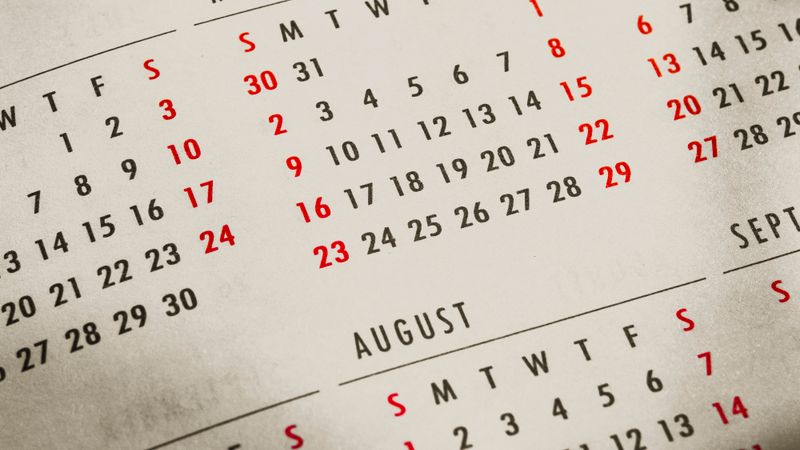
That is a more useful sentence than any plan page, because a day count and a calendar month are different things. A cadence of 30 days comes round thirteen times in a year rather than twelve, and a 90-day cadence lands four times a year on dates that drift. Anyone budgeting a recurring account by multiplying a figure by twelve is budgeting the wrong arithmetic, and the error compounds quietly over a second year.
The same footnote names the only two controls on the account. Subscribers can cancel or snooze Subscriptions in between billing periods to stop receiving additional products and/or services, and can reactivate Subscriptions afterwards. Both of those happen in the gap between charges, which means the window you have is the cadence itself.
Where an online hair loss service vs in person dermatologist comparison gets comparable
An online hair loss service vs in person dermatologist comparison only becomes an arithmetic exercise once both sides are expressed in the same unit.
- Convert the account to a yearly figure using the day count it actually bills on, not the word month.
- Convert the appointment route to a yearly figure by deciding honestly how many visits you would book in twelve months.
- Add anything the account sends that you would otherwise buy separately, and anything the booking route asks you to buy afterwards.
- Subtract the deliveries you would snooze, since a snoozed period is not a charge.
- Only then compare the two totals, because until that point you are comparing a rate against a one-off.
Asking online hair loss service or in person dermatologist which is better gets a billing answer
Posed as a ranking, online hair loss service or in person dermatologist which is better cannot resolve, because one is a rate and the other is a transaction. Posed as a sequence, it does.
- Find the cadence in days before anything else. It is the number the yearly cost is built from.
- Find the cancel route and the snooze route, and check whether both are self-service from the account page.
- Work out when the next charge falls, since the controls operate between billing periods.
- Decide how many visits a year the other route would really involve for you, not how many it could involve.
- Check what reactivation means, because an account that can be switched back on is a different commitment from one that has to be opened again from scratch.
Two service facts sit alongside that and are worth knowing before you commit. The company publishes a complaints route with its own clock, aiming to acknowledge formal written complaints within three working days and to respond within seven. And a banner across the site, read this week, announces a move to a new platform while stating that existing accounts carry over. A platform migration is a normal event, and it is also the moment when self-service controls are most worth testing rather than assuming.
You can look at the brand’s own site here:
The exit is the part an online hair loss service vs in person dermatologist review skips
An online hair loss service vs in person dermatologist review will compare how the two routes start. The honest comparison is how they end. A booking ends by itself the moment it is over. An account ends only when somebody performs an action inside a window, and the window is set by the cadence rather than by the calendar.
That asymmetry is the whole of the commercial difference, and it is why the account side of Hims publishes snooze and reactivate as named features. A snooze is the seller admitting that demand is uneven; a reactivation is the seller keeping the door open. Both are reasonable, and both are easier to use if you have looked at them before the first charge rather than after the third.
What to check before the first charge
- The cadence in days, written down.
- The date of the next charge, written down beside it.
- Whether cancel and snooze are both reachable from the account page without contacting anyone.
- What reactivation restores, and whether it restores the same cadence.
- The complaints route and its stated clock, since that is the only published response time on the commercial side.
Related Guides
Frequently Asked Questions
All four of these are billing questions, which is the only part of the choice a buying guide can settle for you.
Ques: Is a 30 day cadence the same as monthly?
No. Thirty days comes round thirteen times in a year and a calendar month twelve times. Budget on the day count the seller publishes rather than on the word.
Ques: What is the difference between snoozing and canceling?
A snooze pauses deliveries while leaving the account in place; canceling stops it. The company describes both as things subscribers do between billing periods, and describes reactivation as a separate step.
Ques: When should I make the change?
Before the next charge falls, because both controls are described as operating in the gap between billing periods. Working out that date on the day you sign up is the cheapest admin you will do.
Ques: Does the one-off route have any recurring cost?
Not by itself. A booking charges once and renews nothing, which is exactly why it cannot be compared to a rate until you have converted both to a yearly figure.
Bottom line
One route bills on a day count that keeps running until you act, and the other charges once and stops. Find the cadence, find the next charge date, convert both sides to a year, and the comparison answers itself.




1 Comment
Comments are closed.