
Two pairs sit by the door in most British households: something molded you can push your feet into, and something stitched you lace up. Choosing between them looks like a comfort question, and the comparison of everyday clogs vs sneakers is usually argued on feel. There is a harder way to do it, because footwear sold in the United Kingdom has to carry a label, and that label is built from a very short list of words.
This is an independent editorial review. Crocs did not review or approve this article.
The regulations quoted below govern what a footwear label must declare about materials. They say nothing about whether a shoe is comfortable, durable or good for your feet, and nothing here is advice about foot health. They appear because they fix the vocabulary a shopper is given, and that vocabulary turns out to be shorter than the choice being made.
Reading everyday clogs vs sneakers in one table
| What you are comparing | A molded clog | A stitched sneaker |
| Parts the label must describe | Three, and they are the same material | Three, and they usually differ |
| How much the label tells you | Close to nothing | Enough to sort by |
| What decides the purchase instead | Behavior: weight, water, cleaning | Construction: upper, lining, sole |
| Slipping on and off | Designed for it | Laces or a collar to work past |
| Getting them wet on purpose | Expected | Usually a problem |
| What a storefront lets you filter | Style, size, color values only | Style, size, color values only |
The label has three lines and four words
A 1995 statutory instrument, cited as SI 1995/2489, sets the rules for declaring what footwear sold in the United Kingdom is made of. It defines the “main components” as “the upper, the lining and sock and the outer sole”, and defines the outer sole as “the bottom part of the footwear article, which is subject to abrasive wear and attached to the upper”. The labeling duty then reads: it “shall provide information as to the material which constitutes at least 80% of the surface area of the upper, at least 80% of the surface area of the lining and sock and at least 80% of the volume of the outer sole.”
Two details decide how much a shopper actually learns. The first is the fallback, for shoes made of several things: “Where no one material accounts for at least 80% of the surface area or volume, as the case may be, information shall be given as to the two main materials used in the composition of the footwear.” The second is the exclusion list, which keeps the decorative parts out of the calculation entirely, so that trimmings such as “ankle patches, edging, ornamentation buckles, tabs, eyelet stays or similar attachments” do not count toward the upper.
Then comes the vocabulary. The schedule to the regulations sets out pictograms or written indications for the three parts, and for the materials it permits exactly four: leather, coated leather, textile, and the catch-all written on the label as “Other materials”. Natural and synthetic textiles share one word. Every foam, rubber and plastic in the shop shares another. The label must be “visible, securely attached and accessible”, and a retailer selling pictogram-labeled shoes has to display a notice explaining what the symbols mean.
What everyday clogs vs sneakers pros and cons look like once the label is spent
Lay the two shoes against that vocabulary and the asymmetry in everyday clogs vs sneakers is obvious. A stitched sneaker has three genuinely different parts, so its label does real work: a textile upper, a textile lining, a sole in the other bucket. An everyday clogs vs sneakers pros and cons list for the molded side cannot use the same trick, because a one-piece clog is one material pretending to be three parts, and all three lines collapse into the same two words.
That is not a complaint about the rule. The rule was written for shoes assembled from distinguishable pieces. It simply means the information a buyer gets is lopsided:
- For a sneaker, the label narrows the field before you touch anything.
- For a clog, the label tells you what it is not, and nothing about what it is.
- Decorative parts are excluded from both, so buckles and charms never appear.
- The one word that covers molded foam also covers rubber, vinyl and plastic.
What the Crocs listing lists, and what it never names
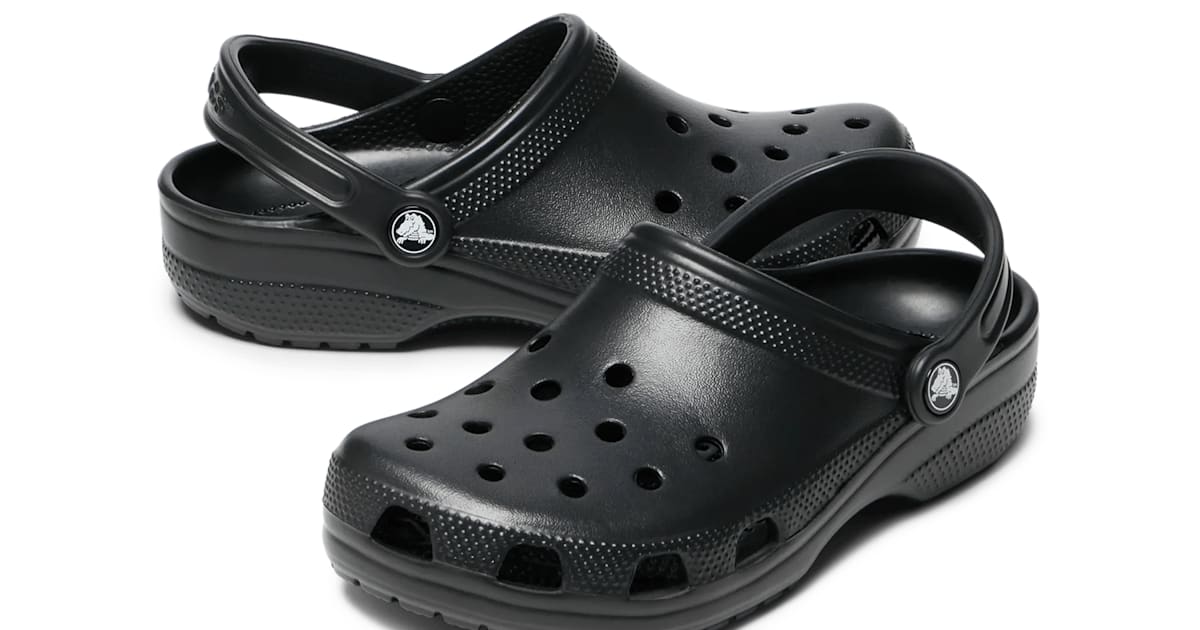
The brand’s own Classic Clog page, read on 17 November 2026, is unusually specific about behavior. Its details list says the shoe is “Incredibly light and fun to wear”, “Water-friendly and buoyant; weighs only ounces”, “Designed to enhance breathability”, “Easy to clean and quick to dry”, and built with “Pivoting heel straps for a more secure fit”. The page states the clog holds twenty-six charms, and a separate line says the product “is made with 25% bio-circular material, calculated using a mass balance approach as certified by ISCC PLUS”.
Read that list again and notice what is missing. Six statements about how the shoe behaves, one about sustainability certification, and no composition at all. The one sentence that mentions material is a percentage certified by a third party, not an answer to the question the label is built around. Looking at the clog range on Crocs makes the same point at aisle level.
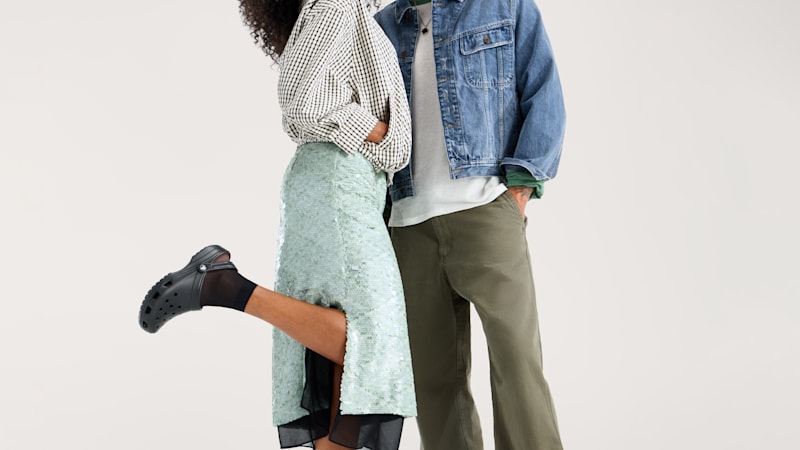
The category page is sortable by style, by size and by color. There is no material filter, which is consistent: a shop cannot offer a facet that would return one value for its whole range. So the comparison a shopper came to make has no sorting tool on either side of it, and the four-word label cannot break the tie either. Here is what is left to work with, in the order that actually settles it:
- Decide whether the shoe will be worn in wet conditions, because that is a yes or no answer rather than a preference.
- Decide how often the shoe comes off and goes back on in a normal day.
- Check the heel strap, since a clog with the strap forward and a clog with it back are two different shoes.
- Check how it cleans, which for a molded shoe is the whole maintenance story.
- Only then compare it with a stitched pair, using the sneaker’s label to see what you are getting there.
Asking is everyday clogs better than sneakers gets a use based answer
Phrased as is everyday clogs better than sneakers, the question has no general answer, and the regulations are a good illustration of why. The label is the same length for both shoes, so it cannot rank them; it can only describe them. What separates them is the job: a shoe you slip on to take the bin out, water the garden or stand in a kitchen is doing different work from a shoe you walk two miles in.
The buoyancy claim is the clearest divider in the brand’s own wording. A shoe described as water-friendly and buoyant is telling you it expects to get wet and to dry quickly. A textile sneaker makes no such claim, and its label will tell you plainly that the upper is textile, which is the part that stays damp.
What an everyday clogs vs sneakers 2026 comparison should still check
An everyday clogs vs sneakers 2026 comparison that stops at comfort language has skipped the two checks that cost nothing. The first is the label itself, which is on the shoe by law and takes ten seconds to read. The second is the sizing, because molded and stitched shoes do not fit the same way and no label covers fit at all.
One more thing is worth saying plainly: the regulations exclude some footwear entirely, naming second-hand and worn footwear, protective footwear and toy footwear. So a work shoe bought as protective equipment is governed somewhere else, and the label on a fashion clog is not the label on a safety clog even when they look alike. The Crocs range itself is sold in both directions, which is exactly why the distinction matters at the point of purchase.
Related guides
- Waterproof Hiking Boots vs Trail Running Shoes
- Lingerie vs Shapewear: Two Different Size Systems
- Polo Shirt vs T Shirt: What Psycho Bunny Lists
Frequently Asked Questions
Three questions come up as soon as people realize the label is that short.
Ques: Does the label tell me what a clog is made of?
It tells you which of four categories the material falls into, and molded foam falls into the one called other materials. That is the whole answer the label is required to give, so the composition itself is not something a UK shopper is entitled to read on the shoe.
Ques: Why does the sneaker label seem more useful?
Because a stitched shoe has three parts made of different things, and the regulations ask for one declaration per part. Three different answers carry more information than the same answer three times.
Ques: Are charms and buckles covered by the label?
No. The regulations exclude accessories and reinforcements from the calculation, naming ankle patches, edging, ornamentation buckles, tabs and eyelet stays, so decorative parts never appear in the declaration.
Bottom line
The label on a British shoe box answers three questions in four words, and for a one-piece molded clog all three answers are the same. Judge the clog on behavior, judge the sneaker on its label, and do not expect the shop to sort either of them by the thing they are made of. Facts here come from the brand’s international storefront, because its United Kingdom pages did not render for us on the day of reading.