
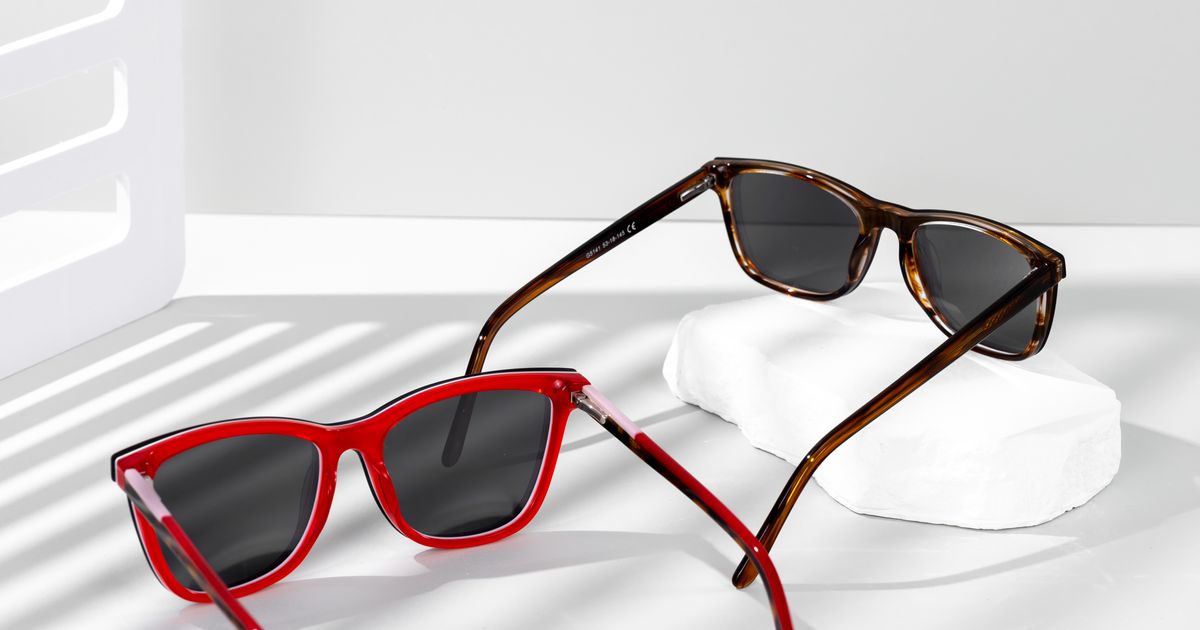
Two pairs of sunglasses can look the same on a shelf and behave very differently on a bright road. The debate over polarised vs non polarised lenses is often mistaken for a debate about UV safety, and it is not one. This guide separates the two ideas and shows how SIN Eyewear, an Australian brand, labels them on its own store.
This is an independent editorial review. SIN Eyewear did not review or approve this article, and other brands are named only as reference points.
Comparison table: polarised and non-polarised lenses
| Point | Polarised | Non-polarised |
|---|---|---|
| What the lens does | Filters reflected glare as well as dimming light | Dims light evenly |
| Glare from water, roads and car hoods | Strongly reduced | Dimmed but still visible |
| UV protection | Depends on the UV rating, not on the filter | Depends on the UV rating |
| Phone and dashboard screens | Can look dark or patchy at some angles | Look normal |
| Best suited to | Driving, fishing, beach and water days | Screen-heavy use and casual wear |
| Cost | Often a little higher | Often a little lower |
How polarised vs non polarised lenses handle glare
Sunlight that bounces off a flat surface becomes mostly horizontal. A polarising filter is built to block that horizontal light, and that is the whole story of polarised vs non polarised lenses. A plain tinted lens makes everything darker by the same amount. A polarised lens also removes the white sheen sitting on water, wet roads and windscreens.
The result is not a darker view. It is a cleaner one, with more visible detail under the reflection.
When polarised sunglasses earn their place
A pair of polarised sunglasses makes the biggest difference where flat, shiny surfaces fill your view.
- Driving toward a low sun on a wet or pale road.
- Fishing and boating, where surface glare hides what is below.
- Beach and pool days with light bouncing off water and sand.
- Long walks beside glass buildings or parked cars.
There are trade-offs. Phone screens, car displays and some ATM screens can dim or show patches through a polarised lens. Some pilots and skiers avoid the filter because they need to read instruments or spot icy patches by their shine.
Why uv400 protection is a separate question
A lens can be polarised and still be weak on UV, or clear of any filter and strong on it. The label to look for is uv400 protection, which means the lens blocks ultraviolet light up to 400 nanometers. SIN Eyewear lists the two things together on many products, with feature lines that read polarised lens and UV400 protection.
When we read the brand’s store feed in November 2026, 124 of 171 listed products carried a polarised lens tag. A smaller group was tagged as UV400 lenses without the filter. So the non-polarised pairs in this range are still sold with a UV rating, which is the part that protects your eyes.
Check Best Deals on SIN Eyewear
What category 3 sunglasses means in Australia
Australian sunglasses are graded in lens categories from 0 to 4 under the national standard. The label category 3 sunglasses describes a dark general-purpose lens with a high level of sun glare reduction, and it is the grade seen on most everyday pairs. Several SIN Eyewear product pages list Category 3 next to the lens type. Category 4 lenses are darker again and are not meant for driving.
The category describes how much light gets through. It does not tell you if the lens is polarised, so read both lines.
Do mirrored lenses change anything?
The shiny coating on mirrored lenses reflects some light away before it reaches the tint. It is a finish, and it can sit on a polarised or a non-polarised lens. The store menu lists mirrored, gradient and polarised as separate lens filters for that reason.
- Check the UV rating first.
- Check the lens category for how dark the lens is.
- Decide if you need the polarising filter for driving or water.
- Pick the tint or mirror finish last, since it is mostly a style choice.
Related guides
Frequently Asked Questions
Quick answers to the questions shoppers ask most about the two lens types.
Ques: Are polarised lenses better for your eyes?
They are more comfortable in glare, which can reduce squinting. Eye protection comes from the UV rating, so a non-polarised pair with a proper rating protects just as well. For personal eye health questions, ask an optometrist.
Ques: How can I test if my sunglasses are polarised?
Look at a phone screen through one lens and rotate the glasses. If the screen goes dark at a certain angle, the lens is polarised.
Ques: Are polarised lenses good for night driving?
No. Any tinted lens reduces the light reaching your eyes, which is unsafe in the dark. Sunglasses are for daylight.
Ques: Does every SIN Eyewear pair have a polarised lens?
No. Most listed pairs were tagged polarised when we checked, but the range also includes UV400 pairs without the filter, blue light glasses and safety glasses.
Check Best Deals on SIN Eyewear
Bottom line
Polarised lenses cut reflected glare and non-polarised lenses only dim the scene, while UV safety sits on a separate label. Choose the filter for driving and water, skip it if you read screens outdoors all day, and confirm the UV rating on any pair you buy.