

Every online store starts as a choice between a file you install and a project you commission. WordPress theme for online stores vs custom web design is usually argued on price and speed, and the question that actually decides it is a boundary question: how much of your shop is allowed to live inside the theme.
This is an independent editorial review. Envato Market did not review or approve this article.
The rulebook quoted below governs the free WordPress theme directory. It has no authority over any commercial marketplace and sets no obligation on a buyer; it appears here because it is the clearest published statement of where a theme’s job is supposed to end.
Comparing WordPress theme for online stores vs custom web design
Both routes end with a shop. They differ in who owns each decision and in what survives a change of mind, which is what the table tracks.
| What you are comparing | Marketplace store theme | Custom build |
|---|---|---|
| Starting point | A finished layout you adapt | A drawing you approve |
| Who decides the structure | The theme author | You and the designer |
| Store features | Often bundled into the theme | Usually separate plugins |
| Changing the look later | Risks losing bundled features | Design layer swaps cleanly |
| Time to a working cart | Days | Weeks |
| What you can sort by before buying | Subject matter of the site | Nothing; you write a brief |
The boundary somebody already wrote down
The official WordPress theme directory publishes a list of requirements, and two of its sections are a precise map of what a theme is for. Under functionality, the list of things a theme must not include runs: “Custom post types”, “Custom blocks”, “Custom roles”, “Shortcodes”, and the catch-all, “Functionality that is not related to design and presentation”.
The next section is headed Plugins and is blunter still. “Themes may only recommend plugins that are hosted on WordPress.org.” Plugins “may only be installed by user action, not automatically”. A theme must not “Include zip files or plugins in the theme folder, or download plugins automatically”. The examples it gives of plugin territory include “Analytics or tracking support”, “SEO options”, “Contact forms”, “Non-design related meta boxes” and “Resource caching”. Failing enough of this has a published consequence: “Themes that have 3 or more distinct issues may be closed as not-approved.”
None of that binds a paid marketplace, and that is the point rather than a complaint. The directory had to write the boundary down because it enforces it. A commercial store theme is frequently sold on exactly the capabilities sitting on the far side of that line, and a buyer gets no equivalent statement about where its design stops and its machinery starts.
WordPress theme for online stores versus custom web design, read as an ownership question
Put the boundary to work and the comparison stops being about looks. WordPress theme for online stores versus custom web design becomes a question about which parts of your shop are portable.
A product grid, a cart page and a checkout flow are presentation. Product types, saved layouts, review widgets and promotional blocks frequently are not. When those arrive inside a theme rather than beside it, changing the theme later takes them with it. A custom build is not automatically better here, but the division is explicit: the designer builds the design layer, and the store functions live in plugins you keep.
- Ask which features are theme functions and which are plugins, in writing, before you buy.
- Treat bundled plugins as rented rather than owned, because the license usually travels with the theme.
- Assume any shortcode in your product descriptions will stop rendering if the theme goes.
- Assume the opposite for anything a plugin wrote into the database.
You can see how the marketplace organizes its WordPress catalog on Envato Market, which lists its branches on the storefront itself.
You can browse the current WordPress branches here:
Check Best Deals on Envato Market
The difference between WordPress theme for online stores and custom web design is visible in the taxonomy
Read on 12 November 2026, the marketplace sorts its WordPress themes by what the website is about. The branches are Blog and Magazine, BuddyPress, Corporate, Creative, Directory and Listings, eCommerce, Education, Elementor, Entertainment, Mobile, Nonprofit, Real Estate, Retail, Technology, Wedding and Miscellaneous.
Two things in that list are worth a shopper’s attention. Two separate branches describe a shop, eCommerce and Retail, so the same purchase can be filed in either place depending on how the author thinks about it. And one branch is not a subject at all: Elementor names a page builder, which is a technology decision wearing a category label.
What the taxonomy never offers is a sort by how much of the shop the theme contains. That is the difference between WordPress theme for online stores and custom web design in one sentence, and it is the variable nobody lets you filter on. The category pages themselves would not open to an ordinary request on the day of writing, so no product counts are claimed here.
WordPress theme for online stores or custom web design for beginners
For a first shop the honest advice is unfashionable. WordPress theme for online stores or custom web design for beginners is nearly always answered by the theme, and not because the theme is better. It is because a beginner cannot yet write the brief a custom build needs.
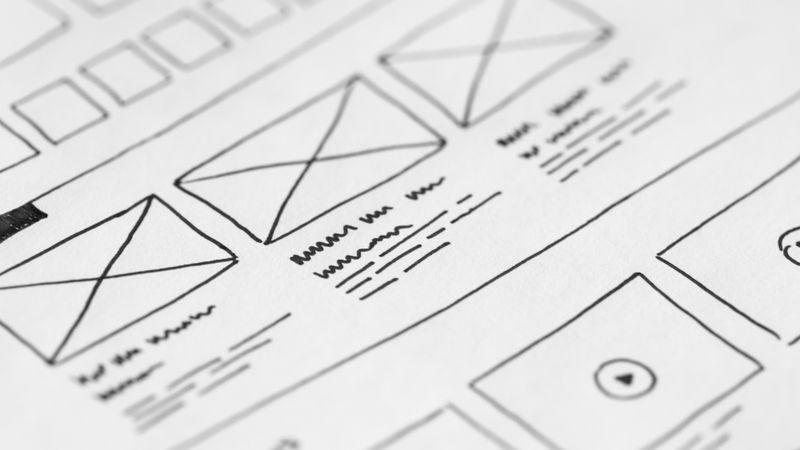
A commissioned design is a specification exercise. You are buying the implementation of decisions you have already made about catalog size, product variations, shipping rules and how a customer gets from a category page to a receipt. If those answers are still guesses, you are paying a designer to guess with you.
The useful sequence is to run the shop on a theme until the guesses become facts, then commission the design against the facts. The theme is cheap enough to be a research instrument, and that is a better reason to buy one than speed.
What to check before you buy either one
- Ask the author which bundled features are plugins and which are theme functions.
- Check whether the demo content you are buying for is included or illustrative.
- Find out how long updates are included and what happens after.
- Write down the three things your shop must do that a generic store does not.
- Decide, before you spend anything, if you would rebuild in a year. If yes, the theme is the right purchase.
Only the fourth of those requires you to know your own business, and it is the one that saves the most money.
Related guides
- Premium Website Plugin vs Free Website Plugin
- WordPress Hosting for Online Stores vs Shared Hosting
- AI Website Builder vs Traditional Website Builder
Frequently Asked Questions
Four questions follow naturally once the theme boundary is visible.
Ques: Does the directory rulebook apply to a theme I pay for?
No. It governs the free WordPress theme directory only. It is useful to a paying buyer as a description of where a theme’s job normally ends, not as a standard the marketplace enforces.
Ques: Will I lose my products if I change theme?
Products created by a store plugin stay in the database. Content that depends on theme shortcodes, theme-registered post types or theme-only blocks is the part that can stop rendering, which is why the question is worth asking the author first.
Ques: Is a custom design more secure than a marketplace theme?
Not inherently. Security tracks how actively the code is maintained and how many plugins are involved, and both routes can score well or badly on that.
Ques: Can I start with a theme and commission a design later?
Yes, and it is the common path. The migration is easier if the shop’s functions live in plugins from the start, which is the same boundary question in a different order.
The storefront lists its WordPress branches here:
Check Best Deals on Envato Market
Bottom line
A theme buys you a finished shop whose boundaries somebody else drew; a custom design buys you boundaries you drew yourself, and a bill for drawing them. Ask which features are plugins before you ask which layout you like.