

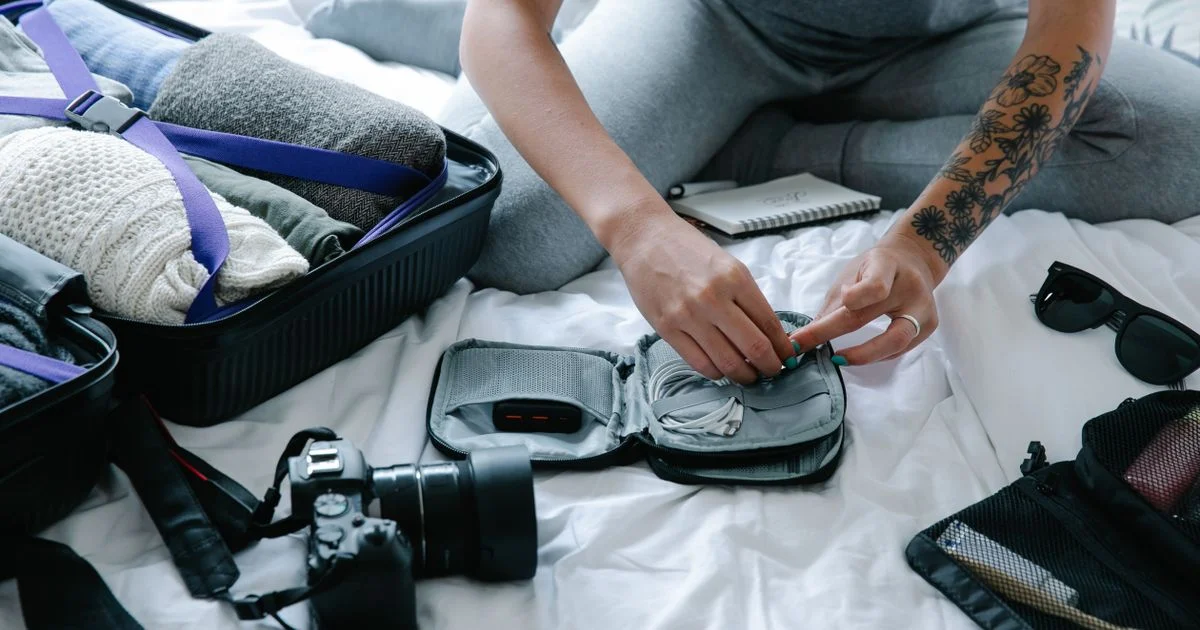
Every trip ends the same way: you unpack and find three things you never touched. The best small gadgets for travel packing are the opposite of that — the handful of items that come out of the bag on day one and stay in rotation. Getting that list right saves weight, space, and a surprising amount of irritation.
Key Takeaways
- A gadget earns its space only if you would use it more than once per trip. Everything else is dead weight.
- Power banks are carry-on only, always. They are banned from checked bags on every airline.
- A cable organizer is the single highest-value item most travelers do not own.
- Multi-purpose beats single-purpose. One adapter that also charges four devices replaces a pouch full of bricks.
- Buy for your actual trips, not the trip you imagine taking.
What the Best Small Gadgets for Travel Packing Have in Common
The short answer: they solve a problem you hit every single day, and they are smaller than the problem. That is the entire filter. The best small gadgets for travel packing are not the cleverest ones — they are the boring ones you reach for in an airport, a rental car, and a hotel room on the same afternoon.
Two rules follow from that. First, anything you use once is luggage, not a tool. A travel steamer sounds sensible until it lives in your bag unused for nine days. Second, weight compounds. Six small items at four ounces each is a pound and a half you carry through every terminal.
Compact Travel Gadgets Review: The Five That Earn Their Space
Run an honest compact travel gadgets review on your own bag and most of it fails. These five survive almost every time.
A cable organizer pouch
Unglamorous and transformative. Cables, chargers, adapters, and a spare memory card live in one zip case instead of migrating to the bottom of a backpack. It is the cheapest item on this list and the one people thank you for suggesting.
A multi-port charger
One wall plug with several USB-C ports replaces a separate brick for the phone, the laptop, the earbuds, and a watch. It also means one thing to forget in a hotel outlet instead of four.
A universal travel adapter
Only matters internationally, but when it matters it really matters. Look for one with built-in USB ports so it doubles as your charger.
Noise-canceling earbuds
Full-size headphones are better on a plane and worse everywhere else. Earbuds fit a pocket, survive a walk, and do not roast your ears in a warm airport.
A small power bank
Covered properly below, because the rules around these have changed more than the hardware has.
Power Is the Whole Game, and the Rules Have Tightened
A dead phone abroad is not an inconvenience, it is a boarding pass, a map, and a payment method gone at once. This is the one category worth spending real thought on.

Airline rules on lithium batteries are stricter than most travelers realize, and they tightened again recently. The parts that are consistent across carriers:
- Carry-on only. Power banks are prohibited in checked luggage, with no exceptions. This is an international standard, not an airline quirk.
- Under 100 watt-hours travels freely. Nearly every consumer power bank, roughly the 10,000 to 27,000 mAh range, sits under this line.
- 100 to 160 watt-hours needs airline approval in advance, and carriers cap how many you may bring.
- Above 160 watt-hours is banned from passenger aircraft entirely.
Beyond those, rules vary by airline and have been changing. Several carriers now restrict using or recharging a power bank during the flight, and some want it kept within reach rather than in an overhead bin. Because these policies differ carrier to carrier, check your specific airline before you fly rather than assuming last year’s answer still holds.
One practical note: capacity is printed on the case in mAh, but the limits are written in watt-hours. Divide the mAh by 1,000 and multiply by the voltage, usually 3.7, to convert. A 20,000 mAh bank works out to about 74 watt-hours — comfortably fine.
Mini Tech Gadgets 2026: What Is Genuinely New
Most mini tech gadgets 2026 coverage is last year’s list with a new number on it. Three shifts are real, though.
USB-C finally won. Phones, tablets, laptops, earbuds, and cameras now largely share one port, which means one cable type and one charger instead of a tangle. If your kit still assumes three connectors, replacing it is the single biggest weight saving available.
Bluetooth trackers went mainstream. A coin-sized tag in a checked bag turns “the airline lost it” into “it is still in Denver,” which is a genuinely different conversation at the service desk.
GaN chargers got small. The technology lets a charger deliver laptop-level power from something the size of a matchbox. A multi-port GaN brick is the clearest upgrade most travelers can make.
Portable Gadgets Comparison: Space Against Payoff
The useful portable gadgets comparison is not brand against brand. It is whether an item pays back the room it takes.
| Gadget | Best for | Trade-off |
|---|---|---|
| Cable organizer pouch | Everyone, every trip | None worth mentioning, beyond a few ounces |
| Multi-port GaN charger | Anyone carrying three or more devices | Costs more than the free brick in your drawer |
| Power bank | Long travel days, poor outlet access | Heaviest item here, and airline rules apply |
| Bluetooth tracker | Checked bags and forgetful packers | Needs a phone nearby and an app kept updated |
| Universal travel adapter | International trips only | Pure dead weight on domestic travel |
| Portable travel router | Long stays, weak hotel Wi-Fi | Genuinely niche; most people never need one |
Packing Them So You Can Actually Find Them
Good gear packed badly behaves like bad gear. A short routine fixes it.
- Give electronics one home. One pouch, always the same one, always in the same pocket.
- Keep batteries reachable. Power banks belong in your personal item, not buried in a bag you stow.
- Standardize on one cable type and carry a single spare rather than one backup per device.
- Charge everything the night before. A power bank that left home at 30 percent helps nobody.
- Do a subtraction pass. After each trip, remove whatever you did not touch. Your kit gets lighter every trip instead of heavier.
Frequently Asked Questions
The same handful of questions come up whenever someone rebuilds their travel kit, and most of them are about batteries and airport rules.
Can I put a power bank in my checked bag?
No. Lithium battery packs must travel in the cabin on every airline. If a bag with one gets gate-checked, take the power bank out and keep it with you.
How big a power bank do I actually need?
For one phone through a long day, 10,000 mAh is plenty and stays light. If you are charging a tablet or topping up a laptop, 20,000 mAh is the sensible ceiling before weight starts to hurt.
Are travel routers worth packing?
For most people, no. They earn their place on long stays with unreliable hotel Wi-Fi or when you need several devices on one paid connection. For a week-long trip, skip it.
What is the one gadget most travelers are missing?
A cable organizer. It costs very little, weighs almost nothing, and removes the most common daily annoyance of travel — digging for the right cable in the dark.
The Bottom Line
Build the kit around what you touch daily: one pouch, one charger, one cable standard, and a power bank sized to your real day rather than your worst-case imagination. Check your airline’s battery rules before you fly, then stop thinking about your gear and go enjoy the trip.


3 Comments
Comments are closed.