

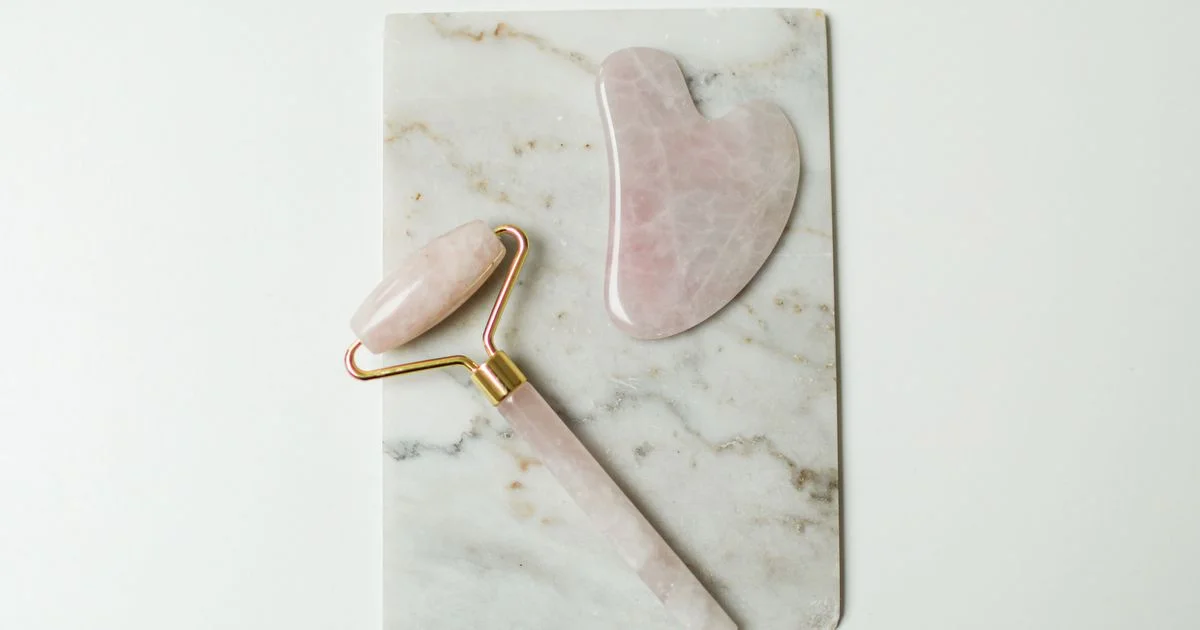
Both tools sit in the same drawer, cost about the same, and promise a sharper jawline. But the gua sha vs jade roller question has a clearer answer than most beauty debates, because the two tools are not really competing — they do different jobs. Knowing which job you want done is the entire decision.
Key Takeaways
- A jade roller cools and calms. A gua sha stone applies pressure and works muscle. Different tools, different results.
- The visible change is reduced puffiness, and it is temporary — hours, not weeks.
- Neither tool changes bone structure or permanently lifts skin, whatever the before-and-after photos suggest.
- The stone material matters far less than the shape and how gently you use it.
- Always use oil or a serum first. Dragging stone across dry skin is how people cause irritation.
Gua Sha vs Jade Roller: What Actually Separates Them
The short answer: choose a jade roller if you want a fast, soothing de-puff in the morning, and choose gua sha if you want deeper massage along the jaw and neck and are willing to learn the strokes.
The gua sha vs jade roller distinction comes down to pressure. A roller glides. Its weight is spread across a spinning stone, so it soothes the surface and moves fluid gently. A gua sha stone is held flat against the skin and pressed, letting you work into the muscle underneath — particularly the tight band along the jaw that clenching creates.
That is why people who grind their teeth often prefer gua sha, and people who mainly want to look less puffy before a meeting reach for the roller.
What Both Tools Genuinely Do
Facial massage moves lymph fluid, and fluid pooling under the eyes and along the jaw is what most people are seeing when they say they look puffy. Move it, and the face looks more defined within minutes. This effect is real, it is well understood, and it is also short-lived — the fluid comes back.
What They Do Not Do
Neither tool builds collagen in any way that survives scrutiny, and neither reshapes your face. Dramatic before-and-after images usually combine genuine de-puffing with better lighting and a different camera angle. Treating these as daily comfort rituals rather than corrective treatments is the honest framing.
Face Massage Tool Comparison
A useful face massage tool comparison ignores the marketing language and looks at what each shape is physically able to do.
| Tool | Best for | Trade-off |
|---|---|---|
| Jade or quartz roller | Quick morning de-puffing, calming irritated skin | Too little pressure to release tight muscle |
| Gua sha stone | Jaw and neck tension, more defined contour | Needs technique; easy to press too hard at first |
| Ice roller | Fast reduction of morning swelling | Cold only; no massage benefit at all |
| Microcurrent device | The closest thing to a lifting claim with evidence behind it | Costs far more and needs consistent use |
| Bare hands | Free, and surprisingly effective | Harder to keep pressure even; no cooling |
Worth noting: hands do most of what these tools do. The tools mainly make the routine easier to keep, which is not nothing — consistency is what produces any result at all.
How to Use Each Tool Without Irritating Your Skin
Technique matters more than the tool. Both work in the same direction — outward and upward, following the path fluid drains along.

- Apply oil or serum first. The tool must glide. If it drags, there is not enough slip and you risk irritation.
- Start at the neck, stroking downward. This clears the path before you move fluid down toward it.
- Work outward from center on the face — jaw toward the ear, cheek toward the temple, brow toward the hairline.
- Use light pressure, especially with gua sha. If skin stays red for more than a few minutes, you pressed too hard.
- Hold the stone almost flat against your skin rather than on its edge. The flat angle spreads pressure safely.
- Finish in three to five minutes. Longer sessions do not add benefit and increase irritation.
Skip both tools entirely over active acne, broken skin, or a fresh cosmetic treatment. Rolling over inflamed breakouts spreads bacteria and makes things worse.
Best Gua Sha Stone Ranked by Material: Does It Matter?
Any list claiming to rank the best gua sha stone by crystal type is selling something. The stone is an inert object being dragged across skin — jade, rose quartz, amethyst, and stainless steel all perform nearly identically.
A few properties do have a practical effect:
- Shape. A curved edge that matches your jaw does more for your results than any material.
- Weight. Heavier stones need less effort from you, which makes pressure easier to keep even.
- Temperature retention. Stone and steel stay cool; steel can also go in the fridge without cracking.
- Edge finish. Run a finger along it. Any roughness or seam will scratch skin over time.
Facial Tool Buying Guide: What to Check Before You Buy
A short facial tool buying guide, because most of the failures here are avoidable. Check the tool for a seam line down the middle — a sign it was molded rather than cut, which usually means a rough edge. Check that a roller’s stone does not wobble on its pin, since wobble becomes squeaking and then a broken tool. And be skeptical of anything sold as a set with a serum you did not choose.
Keeping the Tool Clean
This gets skipped constantly, and it is the reason some people break out after starting a facial massage routine. Both tools collect oil, serum, and whatever was already on your skin, and that film sits there until you wash it off. Rinse the stone with warm water and a drop of gentle soap after every use, then dry it properly — leaving a roller wet lets water seep into the pin housing and loosen the stone. A tool you would not touch to a clean face is a tool that is working against you.
One Real Safety Note
If you have rosacea, eczema, or any condition that makes your skin flush easily, talk to a dermatologist before adding facial massage. Mechanical pressure can aggravate those conditions, and the temporary de-puffing is not worth a flare.
Frequently Asked Questions
These tools have collected a lot of folklore, and a few of the most common questions have straightforward answers.
Which should I buy if I can only pick one?
For most people, gua sha is the more useful single purchase. It can do everything a roller does, plus release jaw tension a roller cannot reach. The roller is much harder to get wrong, though, so if you want something you can pick up without learning technique, start there.
How often should I use them?
Daily is fine for a roller. For gua sha, most people do well with a few times a week, since the deeper pressure benefits from recovery days. More frequent use does not speed up results.
Does keeping the tool in the fridge help?
Cold genuinely reduces swelling, so a chilled tool works better for morning puffiness. It is the temperature doing the work, not the stone. A cold spoon does the same thing.
Can these tools help with a double chin?
They can temporarily reduce fluid retention under the jaw, which makes the area look tighter for a while. They do not reduce fat, and no amount of massage will change that. Anyone promising otherwise is overselling.
The Bottom Line
Pick the roller for a calming morning de-puff, and the gua sha stone if you carry tension in your jaw and want to work it out. Both deliver a real but temporary effect, and neither is worth spending much money on — the technique and the consistency are what matter.


1 Comment
Comments are closed.