

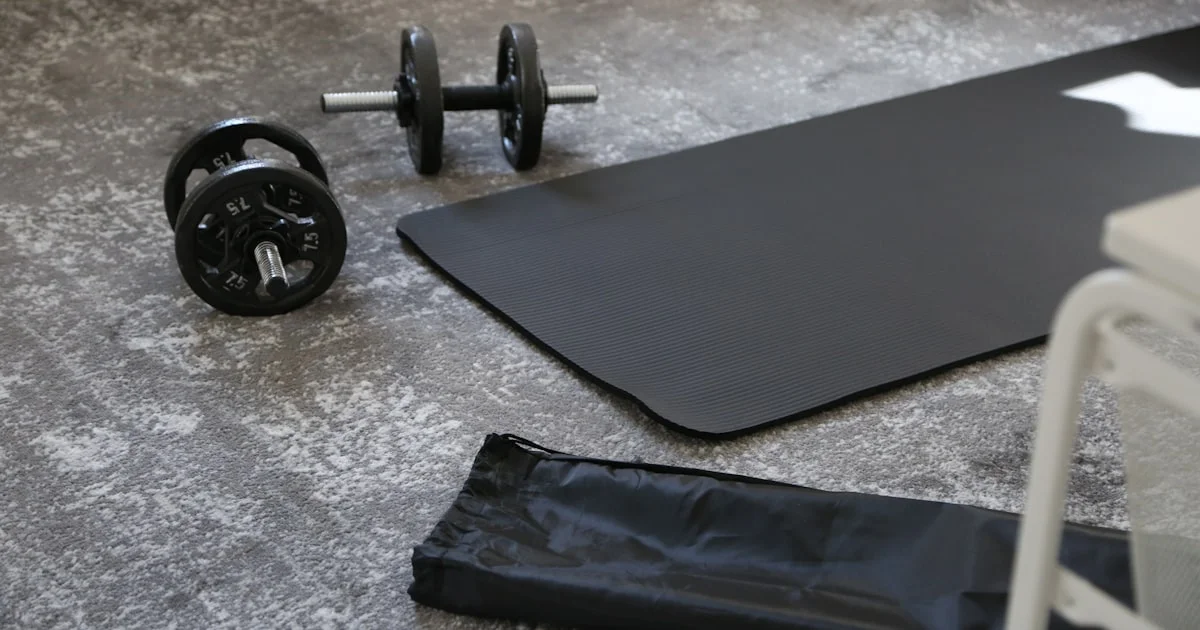
Mat prices run from twenty dollars to well over a hundred, and the expensive ones are genuinely better — just not four times better. The best budget yoga mats for home workouts get the two things that matter right: they grip when your hands sweat, and they are thick enough for your knees.
Key Takeaways
- Grip matters more than price. A sliding mat is unusable at any cost.
- 6mm suits most home workouts. 4mm for balance work, 8mm+ for joint comfort.
- TPE and natural rubber beat cheap PVC on grip and smell.
- New mats are slippery. Most need breaking in — that is normal, not a defect.
- Standard mats are 68 inches. If you are over 5’10”, buy extra-long.
What Makes the Best Budget Yoga Mats for Home Workouts
The short answer: the best budget yoga mats for home workouts combine a genuinely non-slip surface with enough thickness for whatever your knees and wrists have to do. Everything else is comfort and looks.
Think about what you actually do on it. Flowing yoga needs grip above all. Strength work with weights needs density so the mat does not compress. Stretching and floor work need cushioning. A mat perfect for one can be poor for another.
Thickness Is a Trade-Off, Not an Upgrade
Thicker is not better — it is different. 3 to 4mm gives the best floor connection and stability for balance poses, and least comfort. 6mm is the sensible all-rounder for mixed home workouts. 8 to 10mm protects knees and spine for floor exercise and Pilates, but makes standing balance genuinely wobbly.
If you only buy one, take 6mm.
Material Decides Grip and Smell
PVC is the cheapest, lasts well, and grips poorly when wet. TPE is light, recyclable, grippier and the best value in the budget tier. Natural rubber has the best grip of all and the strongest initial smell, and it is heavy. Cork over rubber gets grippier as you sweat, which is unusual and genuinely useful.
Almost every new mat smells for a few days. Unroll it and leave it somewhere airy before deciding anything is wrong with it.

Finding a Cheap Non Slip Exercise Mat
A cheap non slip exercise mat is possible, but “non-slip” on a listing means very little on its own. Two surfaces have to work: the mat against the floor, and your hands against the mat.
Read reviews specifically for the word “sweat”. A mat that grips dry hands and turns to ice when damp is the most common budget failure, and it only shows up in real use.
Texture is a reasonable clue. Slightly raised patterns channel moisture and grip better than a perfectly smooth surface, which relies entirely on material tackiness.
Two fixes if your mat slides: break it in by using it for a week, and wipe it with a damp cloth before practice. Many mats have a manufacturing film that only wears off with use.
Affordable Thick Yoga Mat Options
An affordable thick yoga mat makes sense if your priority is joints rather than balance work.
At 8mm and above, you get real knee and elbow protection for floor work, Pilates and stretching. What you lose is stability — standing poses feel unstable because the mat compresses under your weight, and that instability is genuinely harder for balance.
Watch out for thick mats that are also very light. Low-density foam feels plush for a week, then permanently dents where your knees go. Density matters more than the millimetre number, and it usually shows in weight.
A practical alternative: a 6mm mat plus a cheap foam knee pad. That gives you stability where you need it and cushioning where you need it, usually for less than a single thick mat.
Best Value Workout Mats for Home
Choosing the best value workout mats for home means matching type to activity.
| Your activity | Thickness | Material | Why |
|---|---|---|---|
| Flowing yoga | 4–5mm | Natural rubber or TPE | Grip and floor feel matter most |
| Mixed home workouts | 6mm | TPE | Best all-round compromise |
| Pilates and floor work | 8–10mm | Dense foam | Spine and knee cushioning |
| Weights and HIIT | 6–8mm dense | Rubber | Must not compress under load |
| Travel | 1–2mm | Natural rubber | Folds into a bag |
| Hot yoga | 4–5mm | Rubber or cork | Grip improves as you sweat |
Making a Cheap Mat Last
- Wipe it after every session with a damp cloth. Sweat degrades the surface fastest.
- Skip harsh cleaners. Alcohol and vinegar break down rubber and TPE over time.
- Roll it with the top surface facing out. This stops the edges curling up at you.
- Store it out of direct sun. UV makes budget mats brittle within a season.
- Dry it fully before rolling. A damp rolled mat grows mildew and starts to smell.
- Rotate it end to end every few weeks so wear spreads evenly.
Frequently Asked Questions
These come up most from first-time buyers. If you are stuck on thickness, the answers below should help.
Why is my new mat so slippery?
Most new mats have a residue from manufacturing. It wears off within a week or two of use, and wiping the mat with a damp cloth before each session speeds it up considerably.
Is an expensive mat worth it?
If you practise several times a week, yes — better grip when sweaty and a surface that lasts years rather than months. For twice-weekly home workouts, a good budget mat is genuinely fine.
What size do I need?
Standard mats are 68 inches long. If you are taller than about 5’10”, buy a 72 or 84-inch mat — otherwise your hands or feet end up on the floor in half the poses.
Can I use a yoga mat for weights?
For bodyweight and light dumbbells, yes, if it is dense enough. For heavy weights, use a proper rubber gym mat — dropped weights destroy a yoga mat immediately.
The Bottom Line
Buy for grip first and thickness second, take 6mm if you only buy one, and choose TPE or natural rubber over cheap PVC. Give a new mat a week to break in before judging it, check the length if you are tall, and wipe it down after every session. A $30 mat treated well outlasts a $90 mat that never gets cleaned.


2 Comments
Comments are closed.