

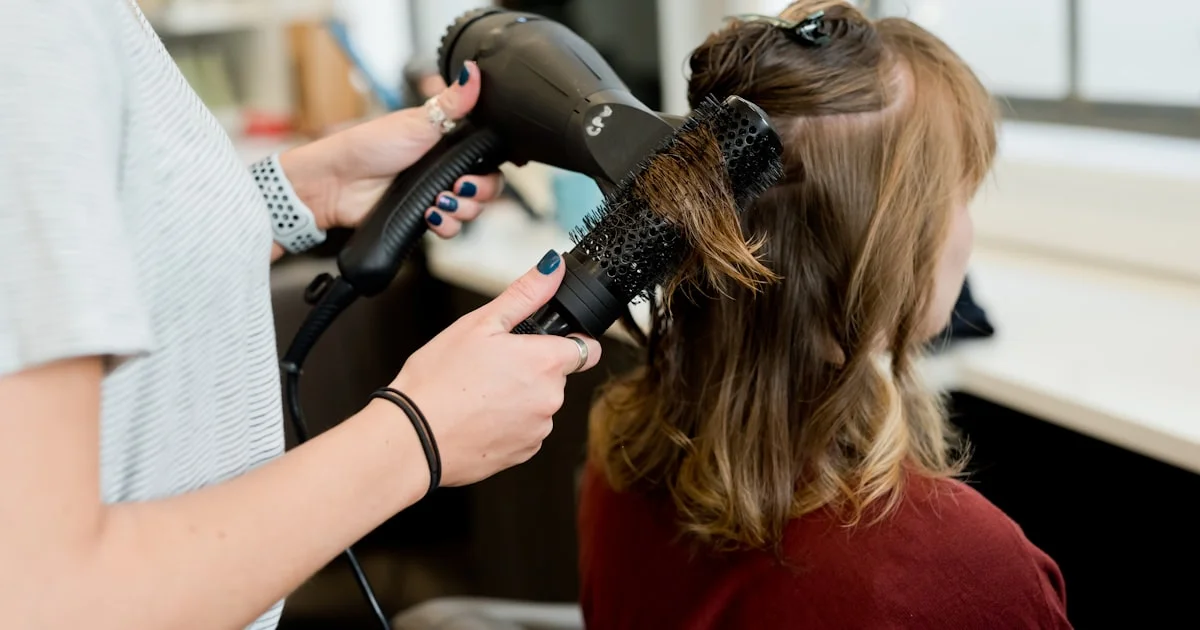
A hot air brush does two jobs at once — it dries and it shapes. That is the whole appeal, and it is why the best hot air brush for styling can replace twenty minutes of juggling a dryer in one hand and a round brush in the other.
Key Takeaways
- Barrel size sets the result. Small for curls and short hair, large for volume and smoothing.
- Work on 80% dry hair, not soaking wet. This is the mistake that ruins results.
- Adjustable heat matters more than maximum heat, especially on fine or colored hair.
- A hot air brush gives volume with movement. A flat iron gives flat and straight.
- Cool shot is not a gimmick — it is what makes the shape hold.
What Makes the Best Hot Air Brush for Styling
The short answer: the best hot air brush for styling matches its barrel size to your hair length, offers at least three heat settings, and has bristles firm enough to grip a section without snagging.
Those three decide almost everything. Wattage and branding matter far less than people expect.
Barrel Size Decides the Look
This is the choice most people get wrong. A small barrel around one inch creates tighter curls and suits short hair or bobs. A medium barrel near 1.5 inches is the all-rounder for shoulder-length hair. A large barrel at two inches or more smooths and adds volume but will not hold a curl.
If your hair sits below the shoulders and you want a blowout look, go large. If you want bounce and definition in a shorter cut, go smaller.
Bristles and Airflow
Mixed bristles — nylon for grip, boar or similar for smoothing — give the most control. All-plastic bristles slip on fine hair and do not tension the section properly.
Look for vents between the bristles so air actually reaches the hair rather than just heating the barrel. And rounded tips, unless you enjoy scraping your scalp.

Volumizing Hot Air Brush Review: What to Expect
An honest volumizing hot air brush review has to separate what these tools do well from what marketing promises.
What they do well: a soft, voluminous blowout in roughly half the time of a dryer and round brush, with far less arm strain and a much gentler learning curve.
What they do not do: straighten tight curls, survive high humidity without product, or fully dry soaking hair without cooking it in the process.
Realistic timing is 10 to 20 minutes for shoulder-length hair once you have the technique. The first two or three attempts will take longer and look worse — that is normal and it does improve quickly.
Best Hair Styler for Beginners
As a best hair styler for beginners option, a hot air brush is genuinely one of the easiest tools to learn. There is no clamping, no risk of leaving a crease, and the movement is close to ordinary brushing.
Three things make the learning curve shorter:
- Sectioning. Clip your hair into four parts. Working section by section is the difference between a blowout and a mess.
- Rough-dry first. Get to about 80% dry with a towel and a few minutes of a normal dryer, then start the brush.
- Slow and steady. Pull the brush through slowly. Rushing leaves half-dry sections that fall flat within an hour.
Start on the lowest heat that works for your hair. You can always step up, and heat damage does not undo.
Hot Air Brush vs Blow Dryer
The hot air brush vs blow dryer question is not really either-or — most people end up using both.
| Factor | Hot air brush | Dryer + round brush |
|---|---|---|
| Skill needed | Low | High, takes practice |
| Speed on damp hair | Slower to fully dry | Much faster |
| Volume at the roots | Good | Best, with technique |
| Arm fatigue | Low, one hand | High, two hands |
| Control over shape | Moderate | Complete |
| Best use | Finishing and shaping | Bulk drying |
The efficient routine uses both: dryer to get most of the water out, hot air brush to shape and finish. That gets you the best result in the least total heat exposure.
Using It Without Damaging Your Hair
- Apply heat protectant to damp hair before anything else. Not optional.
- Rough-dry to about 80%. Soaking hair plus heat causes damage from inside the strand.
- Section into four and clip. Work from the bottom layers up.
- Take two-inch sections. Bigger sections do not dry evenly and lose the shape.
- Roll under at the ends and hold two or three seconds. Longer starts to damage.
- Finish with the cool shot on each section. This sets the shape and it genuinely lasts longer.
Give your hair heat-free days between styling sessions, and clean the brush filter regularly — a clogged one overheats and shortens the tool’s life.
Frequently Asked Questions
These come up most before a first purchase. If you are stuck on barrel size, the answers below should help.
Can I use it on wet hair?
Only if it is specifically sold as wet-to-dry, and even then rough-drying first gives better results with less heat exposure. On a standard model, wet hair means damage.
Does it work on curly hair?
On loose to medium curls, yes — it smooths and adds volume well. On tight coils it will stretch the curl but not straighten it, and a dryer with a concentrator followed by a flat iron gets there with less repeated heat.
How long do the results last?
A day or two, less in humidity. Using the cool shot on every section and sleeping on silk both extend it noticeably.
What size should I buy?
Short hair or bobs: one inch. Shoulder-length: 1.5 inches. Long hair or a big smooth blowout: two inches or more. When in doubt at shoulder length, take the medium.
The Bottom Line
Match the barrel to your hair length, insist on adjustable heat, and always start from roughly 80% dry with protectant on. Section properly, move slowly, and finish each piece with the cool shot. Done that way a hot air brush gives you a soft blowout in half the time — with one hand.


